
Last Updated: November 21, 2026
Quick Summary
The main alternatives to a local vhs conversion shop are mail-in services, retail drop-off counters, and doing the conversion yourself. Mail-in services suit large or mixed-format collections, drop-off counters suit small robust jobs, and DIY suits a few tapes you can afford to spend time on.
- Mail-in services can accept a wider mix of formats and handle volume without leaving home.
- Ask how a mail-in provider packages, insures and handles damaged tapes in transit.
- Retail counters vary widely, so ask what equipment and storage they use.
- A DIY capture of a two-hour tape takes roughly two hours plus setup and file tidying.
- Compare total quotes including minimums, surcharges, repairs, media and postage, not the headline per-tape rate.
Table of Contents
- Why People Look Beyond the Local VHS Conversion Shop
- Mail-In VHS Conversion Services
- Retail Transfer Services and Drop-Off Shops
- DIY VHS to Digital Conversion
- VHS Conversion Cost: Advertised Price Versus Total Cost
- VHS Tape Conversion Turnaround Time Compared
- How to Choose a Reliable VHS to Digital Service
- Frequently Asked Questions
Why People Look Beyond the Local VHS Conversion Shop
Most families with a box of tapes end up asking the same question: is the shop down the road the only sensible option? It usually isn’t. At Showbiz Video Productions, we know that the right choice depends on how many tapes you have, how fragile they are and how quickly you need the files back.
A local shop has real advantages. You can hand over a bag of tapes in person and ask questions face to face. The alternatives below are worth knowing before you commit.
Watch out: a low price on one tape can hide a much higher total once you add postage, extra features and a second drive to pick up the files.
Mail-In VHS Conversion Services
Mail-in services are the most common alternative. You pack your tapes, post them to a processing facility and receive digital files back, usually on a USB drive or by download. The main benefit is range: a good mail-in provider can accept a wider mix of formats than most local shops, and it can handle volume without you leaving home.
The trade-off is trust in the postal journey. Ask how the provider packages tapes, how it insures them in transit and what its policy is if a tape arrives damaged. Those answers say more about a service than any advertised rate.
Retail Transfer Services and Drop-Off Shops
Retail chains and drop-off shops sit between a local studio and a mail-in service. You visit a counter, leave your tapes and collect them later. This suits people who want a quick conversation and a fixed collection date, though the quality and equipment can vary widely between outlets, and, importantly, between individual staff members at the same outlet.
Before you hand over a box, it helps to understand how retail counters typically operate. Ask directly: is the conversion done in this building, or is the box sent elsewhere? If it is sent elsewhere, ask where and how long it sits before processing begins.
A practical checklist for vetting a retail or drop-off counter:
- Equipment: Ask what capture hardware and time-base correction is used. A consumer VCR feeding a generic USB capture stick is not the same as a broadcast-grade deck with a frame synchroniser, and the difference shows on worn tapes.
- Condition check: Confirm whether staff inspect tapes on arrival and record their condition. A shop that accepts a mouldy tape without comment is not protecting your other tapes.
- Handling and storage: Ask where tapes are kept before and after conversion, and whether they are stored upright away from heat and magnetic sources.
- Accountability: Get a written receipt listing every tape, and ask what happens if one is lost, damaged or returned unplayable. Verbal assurances are not a policy.
- Output and ownership: Confirm the file format, resolution and whether you receive editable files or a locked DVD. Ask who retains a copy after handover.
- Turnaround in writing: Get a collection date and ask whether it counts from drop-off or from when processing starts.
Watch out: a retail counter may quote a low per-tape rate but batch your tapes with others, so a single damaged tape can delay the whole order and the outlet may not tell you which tape failed until collection.
Drop-off suits small, robust collections where you value a face-to-face handover and a fixed date. For fragile, mould-affected or irreplaceable tapes, ask the counter the same questions you would ask a specialist studio, and be prepared to walk away if the answers are vague.
DIY VHS to Digital Conversion
Doing it yourself is the cheapest route on paper. You need a working VCR, a video capture device that connects to a computer, and enough free storage for the files. The process is straightforward for a short tape played straight through, but it takes real time: a two-hour tape is roughly two hours of capture, plus setup and tidying the files afterwards.
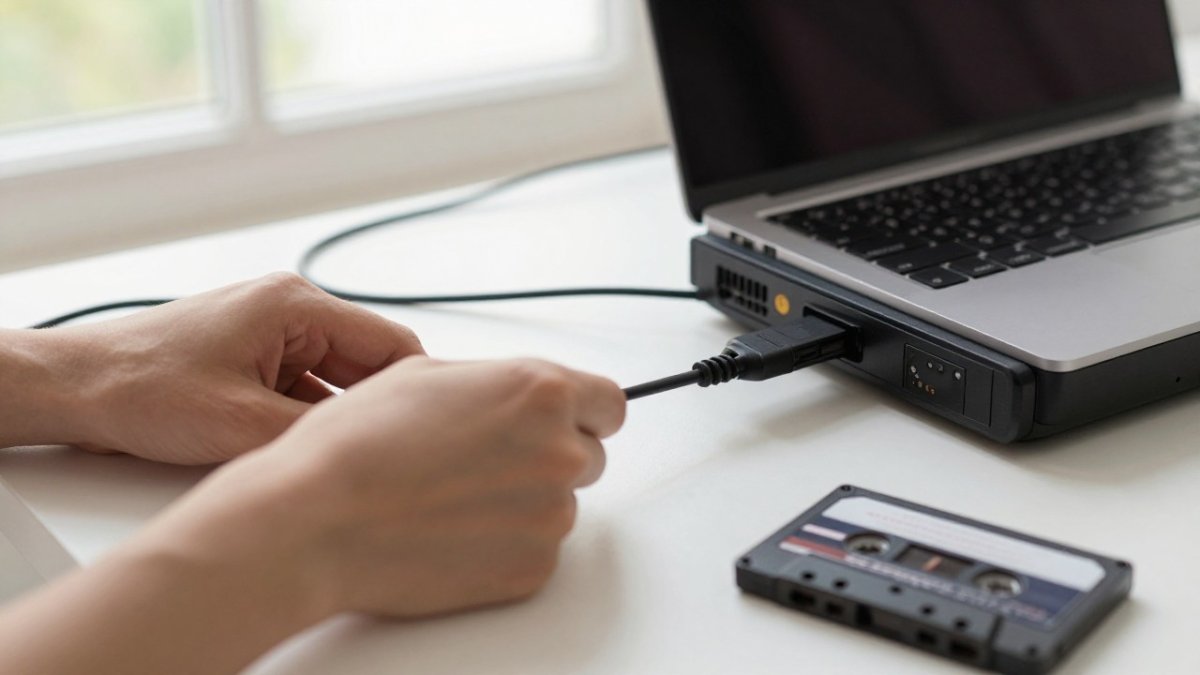
DIY works best for a handful of tapes you can afford to lose time on. For a large or irreplaceable collection, a professional workflow is usually safer.
VHS Conversion Cost: Advertised Price Versus Total Cost
The advertised price per tape is only the starting point, and it is the number most likely to mislead. Compare total cost by building a like-for-like quote that includes every line item below, then divide by the number of tapes to get a true per-tape figure.
The line items that change the total:
- Per-tape rate and minimum order. Many services advertise a low per-tape rate but apply a minimum order, often a set number of tapes or a minimum spend, so a three-tape job can cost far more per tape than the headline suggests.
- Tape length surcharges. A standard two-hour tape may be priced differently from a three-hour or extended-play tape, and long-play recordings can attract a surcharge because they take longer to capture and are harder to track.
- Condition and repair fees. Mould treatment, shell replacement, splicing and re-housing are usually quoted separately. A tape that will not play may be returned unconverted, or converted at a higher rate after repair.
- Output media and extra copies. A USB drive, a DVD set or a cloud download each carries its own cost, and a second copy for a family member is an add-on. Ask whether the price includes the media or whether you supply your own drive.
- Postage and insurance both ways. Mail-in services may charge for return postage and for transit insurance, and the insurance may be capped unless you declare a higher value.
- Travel and time for drop-off. A local counter two suburbs away is not free if it means two return trips and a parking fee.
- Rush or same-day fees. Priority turnaround is commonly priced as a premium, so confirm whether the quoted turnaround is standard or expedited.
Pricing depends on quantity, tape length, condition and delivery method, so check our pricing page or request a quote for an exact amount.
How to compare quotes fairly. Put every provider on the same basis: the same number of tapes, the same tape lengths, the same output format and media, the same turnaround, and return postage included. Ask each provider to state in writing what is excluded. A quote that is silent on repair fees, extra copies and return postage is not a quote, it is an opening offer.
Watch out: the cheapest headline rate often belongs to a service with a high minimum order and paid return postage, which can make a small job more expensive than a specialist studio charging more per tape but including media and delivery.
The line items below can change the final price of a conversion, so it helps to see which costs are commonly separate from the headline rate.
| Cost item | What it affects | Note |
|---|---|---|
| Per-tape rate and minimum order | Headline price | Small jobs can cost more per tape |
| Tape length surcharges | Two-hour vs longer tapes | Long-play tapes may attract a surcharge |
| Condition and repair fees | Mould, shell and splicing work | Usually quoted separately |
| Output media and extra copies | USB, DVD or download | Check if media is included |
| Postage and insurance | Mail-in return trip | Insurance may be capped |
| Travel and time | Drop-off counters | Return trips and parking add up |
| Rush or same-day fees | Turnaround speed | Confirm standard vs expedited |
VHS Tape Conversion Turnaround Time Compared
Turnaround varies more than most people expect. Some providers offer same-day service on small jobs, while large mail-in orders can take several weeks. Ask for turnaround in writing, and find out whether it counts from the day the tapes arrive or the day they are dispatched.
Showbiz Video Productions offers fast turnaround, including same-day service in most cases, which suits people with an urgent occasion or a short deadline.
How to Choose a Reliable VHS to Digital Service
A reliable service earns its place through transparency. Use this short checklist when you compare options:
- Ask what equipment is used and how it is maintained.
- Confirm the output format and whether you receive a copy you keep.
- Read how the provider handles damaged or unplayable tapes.
- Check the insurance and handling policy for tapes sent by post.
- Request a total quote covering every tape and extra fee.
- Look for consistent reviews. Our business is rated 5 stars on Google, and customers such as Rebecca Barry, David P., Bob Gaydon and Linda Hammond have shared their experiences with us.
Taking an hour to check these points will tell you more than any advertisement. Whichever route you choose, the goal is the same: a clean digital copy of memories that will last for generations.
Frequently Asked Questions
What are the best alternatives to a local VHS conversion shop?
The main alternatives are mail-in conversion services, retail transfer services at drop-off counters, and DIY conversion using a VCR and capture device. Mail-in services suit people who can post tapes safely and accept a wait. Retail counters suit those who want face-to-face handover. DIY suits people with patience, a working VCR and time to capture each tape in real time. Compare each on total cost, turnaround, privacy and how your tapes will be handled before choosing.
Can I convert VHS tapes to digital at home?
Yes, if you have a working VCR, a video capture device and free or affordable editing software on a computer. Each tape plays in real time, so a two-hour tape takes about two hours to capture. Tape condition matters, and worn or mouldy tapes may need professional cleaning first. DIY gives you full control over your files, but the quality depends on your equipment and settings.
How do I choose a reliable VHS to digital service?
Ask what equipment is used, how tapes are stored and tracked, whether the service has a repair or cleaning policy for damaged tapes, and who owns the output files. Check whether the provider states its turnaround and pricing clearly, and ask for a written quote including delivery costs. Reliable services answer these questions directly and will tell you if a tape cannot be played.
How long does VHS tape conversion take?
Turnaround depends on the method and the volume of tapes. DIY capture takes roughly the running time of each tape, plus setup. Mail-in services usually add postage both ways on top of processing. Some local services offer same-day or next-day work for small batches. Ask for a specific turnaround estimate and whether it includes shipping, so you can compare options fairly.
