
Table of Contents
- Understanding Vinyl to MP3 Transfer Costs
- What Affects Vinyl Record Digitising Cost
- Professional Vinyl to MP3 Conversion vs DIY
- Vinyl to WAV Conversion: Quality and File Format Choices
- Vinyl Digitising Turnaround Time and Delivery
- Pricing Breakdown: Per-Record vs Per-Track Charges
- Choosing the Right Transfer Service for Your Collection
- Frequently Asked Questions
Last Updated: October 17, 2026
Understanding Vinyl to MP3 Transfer Costs
When you’re ready to preserve your vinyl collection digitally, the vinyl to MP3 transfer cost per record depends on several factors that professional services evaluate individually. At Showbiz Video Productions, we help families understand that vinyl digitising cost isn’t a one-size-fits-all calculation; it varies based on your record’s condition, size, and how you want the final files delivered. The fundamental question most collectors ask is straightforward: how much will it cost? The answer requires understanding what goes into a professional transfer. Unlike simple file conversions, vinyl to MP3 transfer involves physically playing your record on quality equipment, capturing the audio in real time, and processing it to remove noise and imperfections.
Professional services typically charge either per record or per track, and that distinction matters significantly for your budget. Understanding these pricing models upfront helps you make an informed decision about which service approach suits your collection and budget.
What Affects Vinyl Record Digitising Cost
Record condition and cleaning requirements represent the first major cost variable. A pristine record that’s been stored carefully in a climate-controlled environment requires minimal preparation before transfer. Conversely, records exposed to humidity, temperature fluctuations, or dust accumulation need careful cleaning and inspection before the turntable needle touches the surface. Professional services factor in cleaning time, the risk of further damage during playback, and potential audio restoration work that might be necessary afterward.
Record condition and cleaning requirements
Vinyl records are fragile, and their physical state directly impacts both the transfer process and the final audio quality. A record with visible surface noise, scratches, or warping will produce lower-quality digital files unless restoration work is performed. Some services include basic cleaning in their per-record fee, whilst others charge separately for deep cleaning, dust removal, or specialist restoration. Records stored in damp basements or attics often develop mould, warping, or sticky residue on the grooves. These conditions require extra care during transfer; the technician must clean thoroughly without damaging the record further, and the playback equipment must be adjusted carefully to avoid exacerbating existing wear.
Record size and speed (33⅓, 45, 78 RPM)
Different vinyl formats require different playback equipment and techniques. Standard long-playing records run at 33⅓ RPM, whilst singles typically play at 45 RPM. Older 78 RPM records, common before the 1950s, need specialised turntables and styluses to play without damage. Professional services that handle all three speeds charge accordingly. The playback speed matters because it determines how long the transfer takes. A 33⅓ RPM LP side lasting 20 minutes requires 20 minutes of real-time playback to capture digitally. A 45 RPM single might take only 3-4 minutes.
Track separation and file delivery format
One of the most significant cost variables is whether you want your vinyl to MP3 transfer delivered as continuous files or with each track separated into individual files. File format choices also affect cost. MP3 files are universally compatible and smaller in file size, making them the default choice. However, some collectors prefer WAV files for higher audio fidelity, or FLAC files for lossless compression. Converting between formats or delivering multiple versions of the same record increases the service cost.
Professional Vinyl to MP3 Conversion vs DIY
The decision between professional vinyl digitising and doing it yourself hinges on equipment investment, time, and your tolerance for technical complexity. Professional services handle the entire process; they own the turntables, have the technical expertise, and can guarantee consistent quality across your entire collection. DIY conversion appeals to budget-conscious collectors willing to invest upfront in equipment and learn the technical skills required.
Equipment and setup costs for home recording
A basic DIY vinyl to MP3 setup requires a USB turntable (which connects directly to a computer), audio recording software, and a computer with sufficient storage. Entry-level USB turntables start at modest prices, but quality matters; cheaper models often produce lower-fidelity recordings with more background noise. Beyond the turntable, you’ll need recording software. Many options exist at various price points, from free open-source tools to paid professional suites. Learning to use the software, adjusting recording levels, and troubleshooting technical issues consumes time that a professional service handles for you. For a large collection, the cumulative time investment can rival the cost of professional transfer.
Time investment and learning curve
DIY conversion requires learning audio editing fundamentals, understanding sample rates, bit depths, normalisation, and noise reduction. Each record needs individual attention: setting up the turntable, playing it through while monitoring levels, then editing the resulting file to separate tracks and remove clicks or pops. Professional services complete the same work in a fraction of the time because technicians perform these tasks daily and have optimised their workflow. For collections of 50 records or more, professional transfer often becomes more cost-effective than DIY when you factor in your time value.
Vinyl to WAV Conversion: Quality and File Format Choices
Vinyl to WAV conversion captures audio in an uncompressed format, preserving every bit of information from the original recording. WAV files are significantly larger than MP3s; a typical LP might produce a 300-400 MB WAV file compared to a 50-60 MB MP3. The quality advantage of WAV is most noticeable on high-end audio equipment. Casual listeners using smartphone speakers or earbuds won’t perceive the difference between a well-encoded MP3 and a WAV file. Professional services that offer WAV conversion typically charge a premium compared to MP3-only transfer. The recording process is identical; the difference lies in the file format chosen during export.
Vinyl Digitising Turnaround Time and Delivery
Turnaround time varies dramatically between professional services and DIY approaches. Professional facilities often offer expedited options, including same-day service for small orders. Showbiz Video Productions offers fast turnaround, understanding that collectors want their precious records back quickly and safely.
Same-day and expedited service options
Same-day vinyl to MP3 transfer works best for small orders. Larger collections require more time. Rush fees typically apply to same-day options, reflecting the prioritisation of your job over standard queue processing. Some services offer mail-in options where you ship your records to them, they complete the transfer, and return both your original records and digital files. This approach takes longer overall but suits collectors who don’t live near a professional transfer facility.
Shipping and handling for irreplaceable records
Shipping vinyl records safely requires proper packaging to prevent damage during transit. Records are fragile; rough handling, temperature extremes, or humidity changes during shipping can cause warping or further deterioration. Professional services that accept mail-in orders use specialist packaging, insurance, and tracking to protect your collection. When choosing a service, verify their shipping procedures and whether they provide insurance for lost or damaged records during transit.
Pricing Breakdown: Per-Record vs Per-Track Charges
Understanding the distinction between per-record and per-track pricing is essential for budgeting. Per-record pricing charges a flat fee for each LP or single, regardless of how many tracks it contains. Per-track pricing charges based on the number of individual songs you want separated into distinct files. For a standard LP, per-record pricing might charge one flat fee that covers the entire album. Per-track pricing charges for each individual track. However, if you only want specific songs from an LP transferred, per-track pricing lets you pay only for what you need.
Hidden fees and additional charges to expect
Beyond the base per-record or per-track charge, several additional fees commonly apply. Cleaning fees cover specialist preparation work for records in poor condition. Restoration fees apply when audio editing is required to reduce noise, remove clicks, or repair damaged sections. Rush fees apply to expedited turnaround times. Shipping fees apply to mail-in services. Some services bundle these into a single price, whilst others charge à la carte. Always ask for a complete quote that itemises all potential charges before committing. Transparent pricing helps you understand exactly what you’ll pay without surprise fees at the end.
Bulk discounts for large collections
Professional services often discount per-record or per-track rates when you transfer large collections. These bulk discounts reflect the efficiency gained when processing many records in one batch. If you’re digitising a substantial collection, negotiate bulk rates upfront.
Choosing the Right Transfer Service for Your Collection
Evaluating vinyl digitising services requires assessing both technical capability and trustworthiness. Your records are irreplaceable; the service you choose must demonstrate they understand that and have systems in place to protect your collection throughout the transfer process.
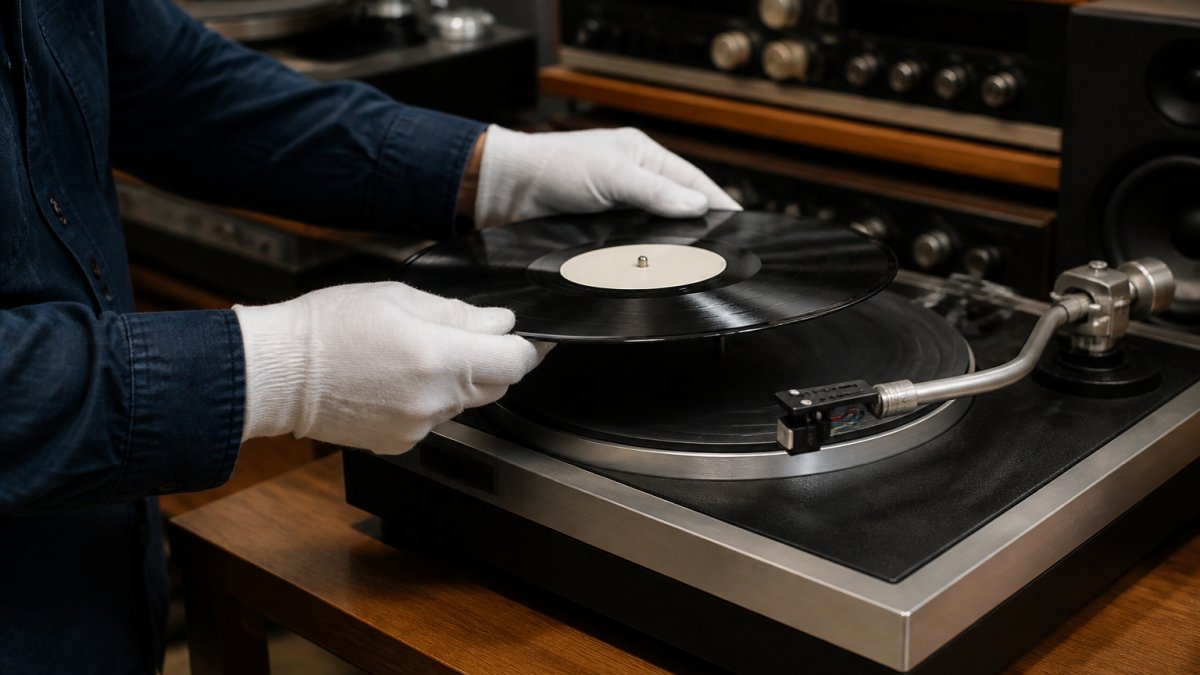
Evaluating sound quality and restoration capabilities
Request sample files from any service before committing your collection. A professional transfer should produce audio that sounds clean, with minimal background noise or clicks. Compare samples from different services; you’ll hear quality differences, especially on records in poor condition where restoration work makes a noticeable difference. Ask about their noise reduction and restoration process. Do they apply automatic filters that might remove subtle musical details, or do they manually adjust settings for each record? Professional services typically customise their approach based on the record’s condition and musical content.
Verifying professional-grade equipment and experience
Turntable quality directly impacts audio fidelity. Professional services invest in high-end turntables with precision tonearms, quality styluses, and accurate speed control. Experience matters equally. A technician who’s transferred thousands of records understands how to handle different record types, recognises when a record needs extra care, and knows how to optimise playback for each transfer. Showbiz Video Productions brings over 20 years of experience to vinyl transfer, alongside professional-grade equipment and a commitment to same-day turnaround in most cases.
Preserving your vinyl collection digitally protects your memories against physical deterioration whilst making your music accessible on modern devices.
Frequently Asked Questions
How much does it cost to transfer a vinyl record to MP3?
Pricing for vinyl to MP3 transfer varies based on record size, condition, and whether you choose track separation. Professional services typically charge per record rather than per side. The cost depends on factors like whether the record needs cleaning, the RPM speed, and your chosen file format. For current pricing and a quote tailored to your collection size, contact a professional conversion service directly to understand what’s included in their per-record rate.
Is DIY vinyl to MP3 conversion cheaper than professional services?
DIY vinyl to MP3 conversion requires upfront investment in a USB turntable, audio interface, and recording software, which can range significantly depending on quality standards. Beyond equipment, you’ll spend considerable time learning recording techniques, troubleshooting audio issues, and processing each record individually. For small collections, professional services may cost less overall when you factor in equipment and your time. For larger collections, DIY becomes more cost-effective long-term, but professional conversion ensures consistent sound quality and proper handling of delicate records.
What’s the difference between vinyl to MP3 and vinyl to WAV conversion?
MP3 is a compressed audio format that reduces file size, making files easier to store and share across devices. WAV is an uncompressed format that preserves more audio detail and is preferred for archival purposes and sound quality. When digitising vinyl records, WAV conversion captures the full audio fidelity of your original record, while MP3 offers convenience and compatibility. Professional services often offer both options, allowing you to choose based on whether you prioritise sound quality or file size and portability.
How long does vinyl digitising turnaround time typically take?
Turnaround time depends on service capacity and collection size. Many professional services offer same-day or next-day turnaround for small orders, whilst larger collections may require several days to a week. Expedited options are sometimes available for an additional fee. Before sending records, confirm the expected turnaround time with your chosen service and ask about any rush processing options if you need your files quickly. Reliable services provide clear timelines upfront so you know when to expect your digital files.
Do conversion services charge per record or per side?
Most professional vinyl conversion services charge per record rather than per side, which simplifies pricing for LPs and albums. However, some services may offer separate pricing for 7-inch singles versus 12-inch LPs, or charge differently for 78 RPM records. Track separation (dividing sides into individual song files) may incur additional charges. Always clarify whether pricing is per record, per side, or per track before committing, and ask what’s included in the base rate so there are no surprises.