
Last Updated: October 31, 2026
Quick Summary
To store vinyl records without damage, stand them upright on their edge in sturdy storage, never stacked flat. Keep them in a room at roughly 18-22°C and 40-50% humidity, away from sunlight and heat sources. Use good anti-static inner sleeves and polyethylene outer sleeves.
- Store records upright on their edge, not flat, so weight does not bend them.
- Keep storage roughly 18-22°C and 40-50% relative humidity, as steady as possible.
- Use a cheap thermometer-hygrometer at shelf height to monitor conditions.
- Choose anti-static inner sleeves and polyethylene outer sleeves rather than PVC.
- Keep records away from windows, radiators and heating vents to prevent fading and warping.
Table of Contents
- Why Vinyl Records Get Damaged in Storage
- How to Store Vinyl Records Vertically
- Vinyl Record Storage Temperature and Humidity Targets
- Choosing the Best Sleeves for Vinyl Records
- Keeping Records Away from Sunlight and Heat Sources
- How to Prevent Vinyl Records from Warping
- Setting Up Your Record Storage for Your Collection Size
- Frequently Asked Questions
Vinyl records are sturdy, but they are not indestructible. Heat, humidity, sunlight and careless stacking can warp a record, scuff its surface or split its jacket within a few years. Vinyl records are often damaged by years of poor storage rather than heavy use. The good news is that the fixes are simple. This guide walks through the steps to store vinyl records to prevent damage, so your collection stays playable and ready for the next listen.
Why Vinyl Records Get Damaged in Storage
Vinyl is a soft plastic, and it responds to its surroundings. Warmth makes it soften and bend, while damp air can encourage mould on sleeves and dust that works its way into grooves. Direct sunlight fades jackets and can yellow the surface over time. Physical pressure is the other big risk.
Most damage is gradual, which is why it is easy to miss. A collection that looks fine on the shelf can already have warped records hidden in the middle of a stack.
How to Store Vinyl Records Vertically
Standing records upright is the most important habit to build. Records should sit on their edge, the way they are packed in a shop, rather than lying flat in a pile.
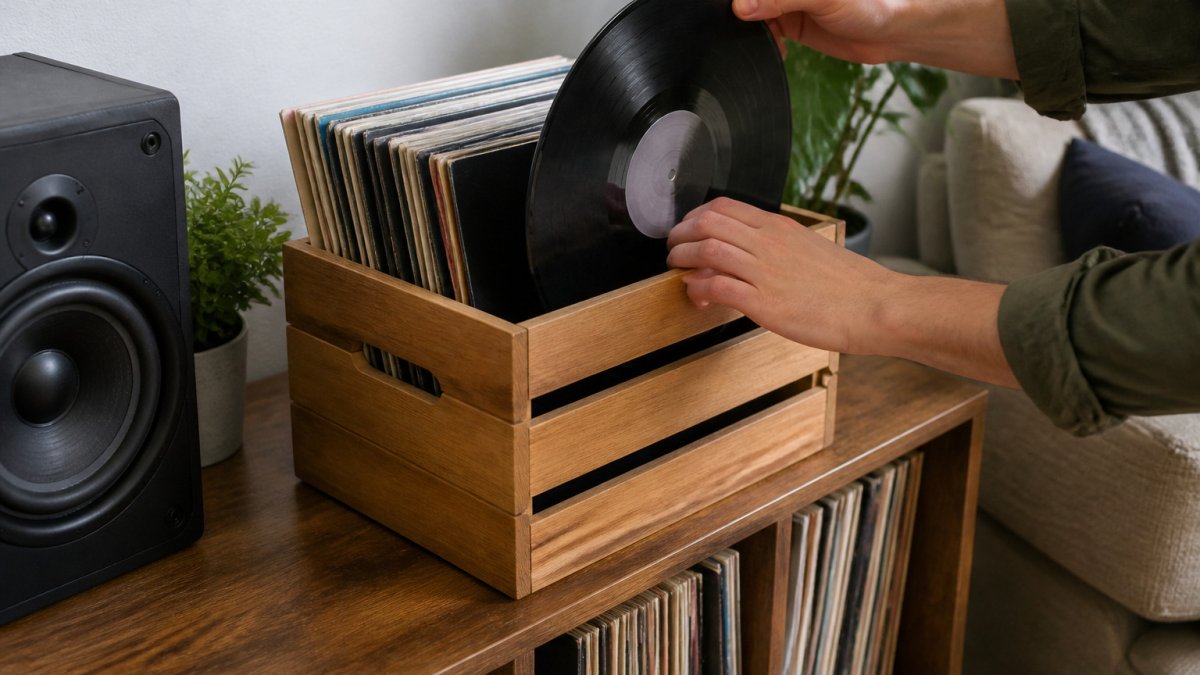
Upright storage also protects the jackets. Each record stays supported along its full edge, so the sleeve does not crease or split at the corners. Keep the records snug enough that they stay upright on their own, but never so tight that you have to force one in or out.
Choosing Sturdy Crates and Shelving
Pick storage that can carry the weight of a full collection. Vinyl is heavier than most people expect, and a flimsy cardboard box can sag or collapse over time. Solid wooden crates, metal record racks and sturdy bookshelves all work well when they are built to bear weight.
- Choose wood or metal over thin particleboard
- Check that shelves are level and well supported
- Keep storage off the floor to limit exposure to damp
- Make sure each shelf can hold a full row of records without bowing
Avoiding Overfilled and Leaning Stacks
A crate that is packed too full forces the records against each other and wears the jackets. A crate that is half empty lets the records lean and bend.
If a row starts to lean, add a bookend or a divider to hold it upright. Leaning is one of the quickest ways to warp a record, so fix it as soon as you notice it.
Vinyl Record Storage Temperature and Humidity Targets
Temperature and humidity matter more than many collectors realise, and vague advice such as ‘keep it cool and dry’ is hard to act on. Vinyl stays most stable when the storage space holds a narrow, steady range rather than swinging from day to day or season to season.
As a practical guide, aim for:
- Temperature: roughly 18-22°C, kept as steady as possible. Vinyl softens as it warms, and repeated swings cause expansion and contraction that can gradually distort a record.
- Relative humidity: roughly 40-50%. Below about 30% the air is very dry and dust and static build up; above about 60% mould and mildew become a real risk to paper sleeves and jackets.
- Steadiness: avoid spots where the temperature drops sharply overnight or climbs in summer. A stable 20°C room is safer than one that swings between 12°C and 28°C.
These are working targets rather than absolute limits. Keeping conditions inside these bands helps prevent the slow warping and sleeve damage that can show up years later.
How to Monitor Conditions
You cannot manage what you do not measure. A simple indoor thermometer-hygrometer gives you a live readout of temperature and relative humidity. Place it at shelf height next to the records rather than on the floor or near a window, since conditions vary across a room.
- Check the reading weekly for the first month to learn how your room behaves.
- Note seasonal patterns, many rooms are damper in winter and hotter in summer.
- If humidity regularly sits above 60%, consider a small dehumidifier or a moisture absorber in the storage area.
- If the air is very dry, avoid placing records directly next to heaters, which dry and heat the air at the same time.
A cheap thermometer-hygrometer is the single most useful purchase for record storage. It turns guesswork into a number you can act on.
Why These Ranges Matter
Heat softens vinyl and lets it bend under its own weight or the pressure of neighbouring records. Damp air attacks the paper components first, jackets, inner sleeves and labels, and mould spores can spread through a whole shelf once established.
A living room or spare bedroom on an interior wall is usually a better choice than a garage or shed, as these spaces tend to hold steadier conditions.
The article gives these working targets for keeping vinyl stable in storage:
| Factor | Target | Note |
|---|---|---|
| Temperature | 18-22°C | Keep as steady as possible |
| Relative humidity | 40-50% | Working target, not an absolute limit |
| Dry air risk | Below about 30% | Dust and static build up |
| Damp air risk | Above about 60% | Mould and mildew become a real risk |
| Stable room example | 20°C | Safer than swinging 12°C to 28°C |
Choosing the Best Sleeves for Vinyl Records
Sleeves are the first line of defence against dust, scuffs and jacket wear. Most collectors use two layers: an inner sleeve that sits directly against the record, and an outer sleeve that protects the jacket. The material you choose matters more than many people expect.
Inner Sleeves: Materials Compared
Inner sleeves touch the playing surface, so abrasion and static are the main concerns.
- Paper sleeves are cheap and common, but they can shed fibres and scratch the record as it slides in and out. They also generate static, which attracts dust.
- Polyethylene sleeves are soft, smooth and non-abrasive. They are a good budget upgrade over paper and reduce static compared with paper.
- Anti-static (often called rice-paper or HDPE) sleeves are the preferred choice for many collectors. They combine a smooth plastic inner with a paper backing, which reduces friction and static while keeping the sleeve rigid enough to slide in easily.
Whichever you choose, replace inner sleeves that look worn, torn, creased or dirty. A grimy sleeve transfers dirt back onto the record every time it is played, and a creased one can scuff the surface as the record moves.
Outer Sleeves: What to Look For
Outer sleeves protect the jacket from handling, shelf wear and dust. Clear plastic outer sleeves are popular because they let you see the cover while keeping it clean.
- Look for sleeves made from polyethylene or polypropylene rather than PVC. PVC outer sleeves can degrade over time and leave a sticky residue or ‘off-gassing’ that damages the jacket.
- Choose a thickness that resists tearing but still lets you slide the record in and out easily.
- Replace any outer sleeve that has split, yellowed, clouded or lost its shape.
Avoid PVC sleeves for long-term storage. They are common on older collections and can leave a sticky film on the jacket that is difficult to remove.
When to Replace Sleeves
Sleeves are consumables, not permanent fixtures. A simple rule is to inspect them whenever you handle a record:
- Replace inner sleeves that are torn, creased, dirty or shedding fibres.
- Replace outer sleeves that are split, cloudy, yellowed or sticky.
- If a record has been stored for years in its original paper sleeve, a fresh anti-static inner sleeve is a cheap and worthwhile upgrade.
Good sleeves cost little relative to the records they protect, and replacing them is one of the simplest ways to extend the life of a collection.
Keeping Records Away from Sunlight and Heat Sources
Sunlight and heat are a double threat. Direct sun fades printed jackets, and it can warp a record that sits in a bright window for long periods.
Keep your collection on an interior shelf away from windows, radiators and heating vents. If you have a record cabinet near a window, close the curtains or blinds during the brightest part of the day. A little planning here saves a lot of repair work later.
How to Prevent Vinyl Records from Warping
Warping is usually caused by heat, pressure or a combination of both. The steps above cover most of the risk, but a few extra habits help protect against warping specifically:
- Store records upright, never stacked flat for long periods
- Keep storage cool and away from heat sources
- Do not place heavy objects on top of record crates or shelves
- Avoid leaving records in a parked car, loft or shed where temperatures can climb sharply
If a record has already warped slightly, do not try to flatten it with heat, since this often makes things worse. You can learn how to restore old vinyl records before recording by cleaning and inspecting them first. Gentle time under light weight, in a stable environment, is the safer approach. For valuable or sentimental records, it is worth asking a specialist for advice before attempting any repair.
Setting Up Your Record Storage for Your Collection Size
The right setup depends on how many records you own and how fast the collection is growing.
Small collection (under 50 records)
- A single sturdy crate or small shelf is usually enough
- Keep it in a cool, dry room on an interior wall
Medium collection (50 to 200 records)
- Use two or three crates or a dedicated record shelf
- Leave a little space at the end of each row for growth
Large collection (200+ records)
- Consider a purpose-built record cabinet with adjustable shelves
- Split the collection by genre or artist so records are easy to find without pulling out whole rows
As your collection grows, check each shelf regularly.
If you are moving a large collection, pack records upright in a sturdy box and cushion the gaps so they cannot shift.
Records that have already been damaged by poor storage can often still be saved.
Storing vinyl well is not difficult, but it does take a little attention.
Frequently Asked Questions
Should vinyl records be stored vertically or horizontally?
Vinyl records should be stored vertically, upright in a sturdy crate or shelf, rather than lying flat or stacked. Stacking heavy records flat can cause warping over time, and leaning them at an angle places uneven pressure on the grooves and jackets. Keep the records snug enough to stand without slumping, but not so tight that you have to force them in or pull them out. Upright storage also makes it easier to see your collection and reduces the chance of physical damage when you browse.
Can heat or sunlight warp vinyl records?
Yes. Heat and direct sunlight can soften vinyl and cause records to warp, particularly when they are left in a hot car, near a radiator, or on a windowsill. Ultraviolet light can also fade record jackets and weaken card over time. Store your collection in a cool, dry room away from heaters, heating vents and sunny windows, and keep records out of attics and sheds where temperatures swing widely. A consistent, moderate environment is the simplest way to protect your records.
What is the best way to store vinyl records in their sleeves?
Place each record in a clean inner sleeve, preferably a non-woven or anti-static polyethylene sleeve, then slide it into its jacket with the opening at the top. Use an outer sleeve or protective cover for jackets that are already worn or valuable. Avoid paper inner sleeves, which can scratch the record and collect dust over time. Replace sleeves that are torn, dirty or brittle, and store records upright so the sleeves are supported evenly along their length.
Can cold temperatures ruin a vinyl record?
Extreme cold is generally less damaging than heat, but repeated temperature swings can still stress vinyl and cardboard jackets. Freezing conditions can make jackets brittle and cause sleeves to split, so avoid storing records in unheated garages, sheds or cars. Let records acclimatise to room temperature before playing them if they have been somewhere very cold. A stable indoor environment, rather than a particular extreme, is the goal.
