Last Updated: November 27, 2026
Quick Summary
Professional vhs conversion is usually worth it for most families with a box of tapes and no working VCR, especially for large or irreplaceable collections. A DIY route can suffice for a few tapes on a player you already own.
- Count your tapes, judge how irreplaceable they are, and check whether you own a working VCR.
- DIY capture runs in real time, so a 50-tape collection at two hours each takes 100 hours.
- Compare total DIY cost, including equipment and your hours, against the per-tape service price.
- Conversion preserves what is on the tape but cannot restore detail or repair physical deterioration.
- Inspect tapes for mould and sticky-shed syndrome, and never play mouldy tapes on your own VCR.
Table of Contents
- Is Professional VHS Conversion Worth It for Your Tapes?
- Professional VHS Conversion Versus DIY Digitising at a Glance
- VHS to Digital Conversion Cost: Per-Tape and Total Spend
- DIY VHS to Digital Converter Options and Equipment Needs
- VHS Conversion Quality, Tape Condition and Realistic Expectations
- VHS Tape Conversion Turnaround Time and Output Formats
- Choosing Your Next Step for Your VHS Collection
- Frequently Asked Questions
Is professional VHS conversion worth it? For most families with a box of tapes and no working VCR, yes. For a short run of tapes you can play on a machine you already own, a DIY route may be enough. Showbiz Video Productions converts home video, so the question is one we answer often. Below we set out the trade-offs honestly, including where DIY makes more sense.
The research available for this topic is thin, so we have avoided quoting specific market statistics. Where a figure matters, we point you to the source so you can check it for yourself.
Is Professional VHS Conversion Worth It for Your Tapes?
For most collections, professional conversion is worth it when the tapes matter and the time, equipment or know-how to do the job well is missing. The deciding factors are how many tapes you have, how much they are worth to you emotionally, and whether you already own a working VCR and capture setup.
Start with three questions. How many tapes are there? Are any of them irreplaceable? Do you have a player that still works properly? If the answers point to a large or precious collection and no reliable equipment, a professional service is usually the safer bet.
Professional VHS Conversion Versus DIY Digitising at a Glance
The two routes differ mainly in cost of time, quality control and risk. DIY keeps the work in your hands. Professional conversion hands it to people who do it every day.
| Factor | Professional conversion | DIY digitising |
|---|---|---|
| Upfront cost | Pay per tape or per job | Equipment and software |
| Time required | Little of your time | Hours per tape, plus setup |
| Playback quality | Handled by specialists | Depends on your VCR and capture device |
| Damaged tapes | Experienced handling | Higher risk of further damage |
| Best for | Large or precious collections | A handful of tapes, a working VCR |
Many people discover that DIY looks cheap until they count the hours. Each tape must play in real time, so a 50-tape collection can take days of continuous attention. For a fuller walkthrough of the steps and equipment, see complete guide to converting cassette tapes to digital audio.
VHS to Digital Conversion Cost: Per-Tape and Total Spend
Most services quote per tape, but the number that actually answers “is it worth it” is your total outlay. Build that figure in two columns: what a service charges, and what DIY really costs once you count hardware, software, storage and your own hours.
On the service side, pricing depends on tape count, running time, condition and output format. Showbiz Video Productions publishes current pricing on its website, so request a quote for your exact collection. Add extras such as USB drives, DVDs or cloud delivery, and ask whether inspection, cleaning or repair of damaged tapes carries a separate charge.
On the DIY side, the visible cost is the capture device, but the real cost includes a working VCR (increasingly hard to find in good condition), a capture card or standalone converter, capture and editing software, and storage for large files. Then add your time: VHS plays in real time, so a two-hour tape takes at least two hours to capture, plus setup, file naming, checking and backup. A 50-tape collection at two hours each is 100 hours of attention before any editing.
A useful break-even test: divide the total DIY cost (equipment plus a realistic value for your hours) by the number of tapes. If that figure sits above the per-tape service price, the service is usually the better value, especially once you account for the risk of a failed capture on a fragile tape. If you already own a reliable VCR and capture setup, the DIY marginal cost per tape drops sharply and the calculation can flip.
Watch out: cheap standalone converters often record to a compressed format at low bitrate, so a low purchase price can cost you quality you cannot recover later. Check the output format and bitrate before buying.
Whichever route you choose, budget for storage and a backup copy. Digital files are not preserved until they exist in at least two places, and cloud storage or external drives carry their own ongoing cost.
DIY VHS to Digital Converter Options and Equipment Needs
A DIY setup usually needs a working VCR, a video capture device that connects to a computer, and capture software. Some people use a standalone VHS-to-USB converter that records directly to a drive without a computer.
A standalone converter is the simplest DIY option, but it still requires a working VCR, which many households no longer have. You can follow step-by-step instructions for digitising VHS tapes at home to see how each stage fits together. Before buying anything, test a few tapes on your existing player to check whether the picture and sound are stable enough to be worth the effort.
VHS Conversion Quality, Tape Condition and Realistic Expectations
Conversion preserves what is on the tape; it does not restore it. Understanding that distinction is the difference between a fair expectation and a disappointment.
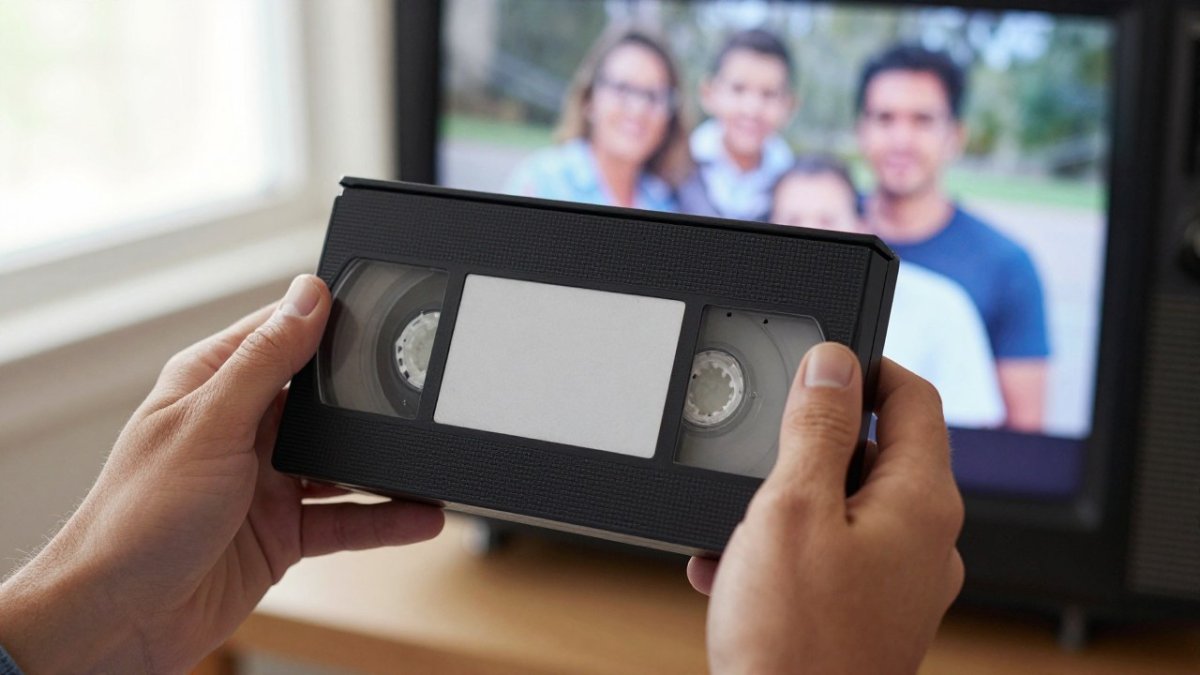
VHS is a low-resolution analogue format, so a digital copy will not look sharper than the source. What good conversion can do is capture the tape cleanly, correct tracking and audio levels, and produce a stable file that will not degrade further. To weigh this against keeping the original tapes, read how digital conversion compares with physical tape storage. What it cannot do is recover detail the tape never held, remove all dropouts and noise, or repair footage that has physically deteriorated. A well-stored tape generally converts to a watchable result, while tapes kept in poor conditions may show damage.
Tape condition drives the outcome more than the equipment does. Before conversion, tapes should be inspected for mould, visible damage, slack or stretched ribbon, and signs of sticky-shed syndrome, where the binder breaks down and can clog a player. A service should assess each tape and tell you what it can and cannot recover before it begins.
Watch out: playing a mouldy or sticky tape on your own VCR can contaminate the machine and damage other tapes. If a tape smells of vinegar or shows white powder, stop and seek assessment rather than running it.
Set expectations by tape type. Home recordings, camcorder footage and off-air recordings all behave differently, and audio can degrade independently of picture. Ask for a sample conversion of one representative tape before committing a whole collection.
Finally, plan for preservation, not just conversion. Choose an archival-friendly file format and keep at least two copies, ideally in different locations, and check the files play correctly on a device other than the one that created them. A converted file that sits on a single failing drive is not preserved.
VHS Tape Conversion Turnaround Time and Output Formats
Turnaround varies with the size of the job and the service you choose. Ask about timing when you request a quote.
Think about the format you need before you send tapes away. Common outputs include digital files you can copy to a drive or cloud storage, USB drives for easy playback, and DVDs that work in standard players. Choose the format that matches how your family will watch the videos.
Choosing Your Next Step for Your VHS Collection
If you have a large or sentimental collection, or no working VCR, a professional service is usually worth the cost. Before deciding, you can compare alternatives to a local VHS conversion shop. If you have only a few tapes and the equipment already, a DIY trial on one or two tapes will show you whether it is worth continuing.
When you are ready, get a quote from Showbiz Video Productions to see current pricing for your tapes.
Frequently Asked Questions
Is it worth paying a professional to convert VHS tapes?
It depends on how many tapes you have, how much they matter to you, and whether you already own a working VCR and capture equipment. For a small number of tapes, a DIY converter may be a reasonable option if you are comfortable operating it. For larger collections, damaged tapes, or irreplaceable recordings, a professional service can reduce the time and technical effort involved. Compare the total cost, including any equipment you would need to buy, against the per-tape price from a provider such as Showbiz Video Productions, and check its website for current pricing or a quote.
How much does professional VHS conversion cost?
Professional VHS conversion is usually priced per tape, and the total depends on tape count, the output format you choose and how quickly you need the files back. Confirm the final price for your order on the Showbiz Video Productions pricing page or by requesting a quote. Factor in any extras before comparing against a DIY device, which is a one-off hardware purchase plus your own time.
Is professional VHS conversion better quality than DIY?
Quality depends on the playback equipment, the capture process and the condition of the tape, so a professional service is not automatically better in every case. Professional services may handle worn or sticky tapes that home setups struggle with. Ask any provider what equipment it uses and how it handles damaged tapes before you commit, and be realistic that heavily degraded tapes may not be recoverable to a perfect standard.
How long does it take to convert a VHS tape to digital?
Turnaround depends on the provider, the number of tapes and the service level you choose. Confirm the timeframe for your specific job before sending tapes. DIY conversion takes as long as it takes to play each tape in real time, plus setup and editing time.
