
Table of Contents
- Why Preserving 8mm Film Reels Matters
- How to Store 8mm Film Reels: Temperature and Humidity
- How Long Does 8mm Film Last Without Proper Care
- Inspection and Safe Handling Before Storage
- Recognising Signs of Vinegar Syndrome in Film
- How to Digitise 8mm Film for Long-Term Preservation
- Practical Home Storage Setup and Monitoring
- Frequently Asked Questions
Last Updated: October 12, 2026
Why Preserving 8mm Film Reels Matters
Your family’s home movies are irreplaceable. Unlike digital files, physical 8mm film degrades every year. The best way to preserve 8mm film reels requires understanding storage fundamentals and the threats that damage film over time.
Film doesn’t just fade quietly. Vinegar syndrome, mould, brittleness, and colour shift are active processes happening right now in your cupboard.
At Showbiz Video Productions, we’ve recovered footage families thought was lost forever. Some reels arrived in terrible condition, yet careful inspection revealed footage worth preserving. Don’t wait until damage is visible: proper storage prevents deterioration before it starts.
These aren’t just videos. They’re your grandparent’s wedding, a child’s first steps, family holidays from decades past. Once 8mm film is gone, it’s gone. Professional transfer is the only way to guarantee these memories survive for the next generation.
How to Store 8mm Film Reels: Temperature and Humidity
Storage conditions are the foundation of film preservation. Film is a cellulose acetate or polyester base coated with light-sensitive emulsion, and both are sensitive to heat and moisture. Get the environment wrong and you accelerate its decay.
Ideal Storage Conditions
The ideal storage environment for 8mm film is cool and dry. Specifically, aim for temperatures around 4°C (40°F) with relative humidity at approximately 40 percent. This combination slows the chemical reactions that cause vinegar syndrome and colour fading.
Perfect conditions aren’t always realistic at home. If you can’t hit 4°C and 40 percent humidity, prioritise consistency. Fluctuations are worse than steady, slightly warmer conditions: a cupboard at 15°C with steady 50 percent humidity preserves film better than a space swinging between 10°C and 24°C.
Avoid basements and attics: basements flood, and attics swing from scorching to freezing. Choose interior cupboards or shelves away from exterior walls, ideally in climate-controlled living spaces.
Direct sunlight must be avoided completely. Ultraviolet light fades colour film rapidly and can cause emulsion damage. Keep reels in opaque containers or boxes that block light entirely.
Choosing Archival-Quality Containers
Not all containers are equal. Standard plastic boxes off shop shelves often off-gas chemicals that accelerate decay. Archival-quality containers are chemically inert and won’t react with film over time.
Look for acid-free cardboard or archival-grade polypropylene. Metal film cans are excellent if rust-free and undented. Avoid PVC plastic, which releases hydrochloric acid as it ages, directly causing vinegar syndrome.
Consider ventilation: sealed boxes trap moisture, while slightly ventilated containers allow air circulation without dust. Archival film cans often feature small ventilation holes for this reason.
Label containers clearly on the outside, never on the film itself. Use acid-free labels and archival-quality tape. Information written directly on reels or film can transfer chemicals that damage the emulsion.
How Long Does 8mm Film Last Without Proper Care
Film longevity depends on storage conditions and the film’s composition.
The determining factor is vinegar syndrome. This occurs when the cellulose acetate base breaks down, releasing acetic acid, the chemical that gives vinegar its smell. Once vinegar syndrome starts, it accelerates.
Heat and humidity trigger vinegar syndrome: every 10-degree temperature increase roughly doubles chemical degradation, and humidity above 60 percent lets mould grow and moisture penetrate the film base.
Without proper storage, home movies from the 1960s and 1970s are likely deteriorating right now.
This is why digitisation matters. Once film is transferred and backed up to multiple locations, it’s essentially permanent: digital files don’t age or fade and can be copied infinitely without quality loss.
Inspection and Safe Handling Before Storage
Before long-term storage, inspect each reel carefully. This reveals damage needing attention, but incorrect handling during inspection can cause new damage, so technique matters.
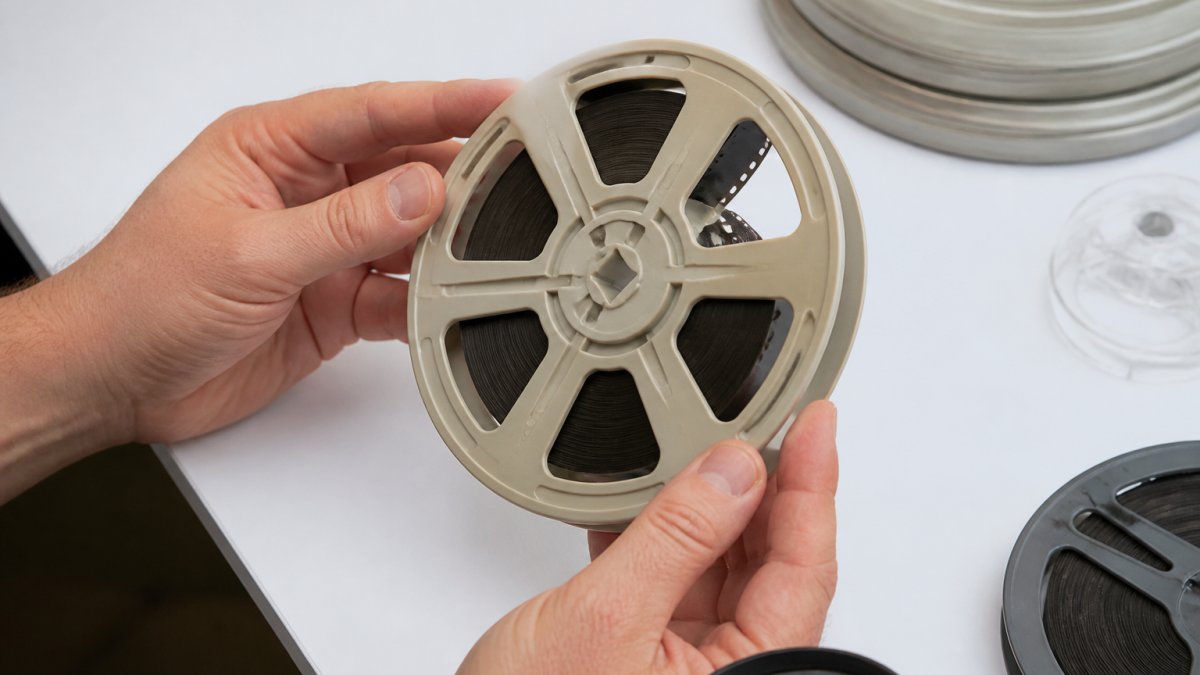
Step-by-Step Inspection Process
Step 1: Prepare your workspace. Use a clean, dry table with a white cloth or paper surface, and wash your hands thoroughly.
Step 2: Examine the reel and can. Check for rust, dents, or sharp edges, and inspect the can for damage.
Step 3: Check the film leader. The leader is the clear or opaque film at the start of the reel.
Step 4: Inspect for vinegar syndrome. Smell the reel. A vinegar or acetic acid smell indicates active vinegar syndrome.
Step 5: Look for physical damage. Rotate the reel slowly and watch for tears, creases, or separation.
Step 6: Check splices. Film reels often have spliced sections where film was joined. Look for tape splices that are lifting or separating.
Document your findings: photograph any damage and note the reel number, date, and condition.
Safe Handling Techniques
Always handle film by the reel edges, never the film itself. Finger oils and dirt transfer permanently and cause spotting or deterioration.
When rotating a reel, move slowly and deliberately. Jerky movements can make film slip or break. If you feel resistance, stop immediately and don’t force it.
Never unwind film from a reel unless trained. Unwinding creates tension that breaks brittle film. If you need to see specific footage, have it professionally transferred instead.
Store film vertically on shelves, not stacked flat. Stacking creates pressure that can damage film at the bottom of the stack. Vertical storage also allows air to circulate around each reel.
If you find mould, handle that reel separately and wear a dust mask. Don’t clean it yourself, as this spreads spores.
Recognising Signs of Vinegar Syndrome in Film
Vinegar syndrome is the primary threat to 8mm film longevity: a chemical process that’s difficult to reverse and impossible to stop once started. Recognising early signs lets you act before damage becomes severe.
The first sign is smell. A vinegar or acetic acid odour means vinegar syndrome is active, the most reliable indicator. Trust your nose: that sharp, acidic smell means the film is degrading.
Visual signs appear as it progresses: the base becomes brittle and may crack, colours shift to brownish or pinkish tones, and the emulsion may lift or flake. In severe cases, the film shatters.
Other signs include warping or curling (moisture in the base), new spots or discolouration (mould or chemical breakdown), and splice tape turning brown or sticky.
If you notice any of these signs, the film is at risk.
Poor storage accelerates these processes.
How to Digitise 8mm Film for Long-Term Preservation
Digital conversion is the most reliable way to preserve 8mm film permanently. Once transferred and backed up properly, digital files don’t age, fade, or deteriorate the way film does.
Professional Digitisation vs. Home Transfer
Professional digitisation services use frame-by-frame scanning that captures each frame individually, producing 2K or 4K files. It’s slow; a 400-foot reel takes several hours, but results are superior to home methods.
Professional services also handle colour correction, restoring natural colours shifted by age or storage, and can often recover footage from reels that won’t play on standard projectors.
Home digitisation using consumer equipment like the Wolverine 8mm Film Digitizer is faster and cheaper, projecting film onto a sensor at typically around 1080p.
For film in poor condition, professional transfer is essential. Damaged film may jam or break in consumer equipment. Professional services have the expertise and equipment to handle fragile reels safely.
What to Expect From Digital Conversion
When you digitise 8mm film, you’ll receive MP4 or MOV files playable on any modern device, computer, tablet, television, or smartphone, and easily shared with family via email or cloud storage.
Professional services typically deliver files on external hard drives or USB drives, some with cloud backup.
Resolution matters for long-term preservation: 1080p or higher remains viewable on future devices, while lower-resolution files may look poor on large modern screens.
The digitisation process typically takes 2 to 4 weeks for professional services, depending on volume and complexity. Showbiz Video Productions offers same-day service for most jobs.
Once digitised, your original film reels still need proper storage. The digital files are your insurance policy, but the original film remains a historical artifact worth preserving if conditions allow.
Practical Home Storage Setup and Monitoring
Setting up home storage for 8mm film doesn’t require expensive equipment, just consistency and attention to environmental conditions.
Choose a cupboard, closet, or interior shelf away from exterior walls. Avoid basements, attics, garages, and sheds, which experience temperature and humidity extremes that accelerate deterioration.
Install a thermometer and humidity meter and check them monthly.
Organise reels by condition.
Create an inventory listing each reel by number, date, content, and condition, and photograph each one.
Check your storage area seasonally for moisture, temperature fluctuations, or pests, and keep it sealed against rodents and insects.
Monitor reels annually, rotating them slightly to check for new deterioration. If vinegar syndrome develops, move that reel to priority status for digitisation.
Most importantly, don’t delay digitisation. Film doesn’t improve with age, and every year brings it closer to irreversible damage.
Preserving 8mm film reels requires understanding the threats: heat, humidity, vinegar syndrome, and time itself. Showbiz Video Productions handles both the technical expertise and the careful handling your precious reels deserve, with professional-grade equipment and same-day service available for most jobs. Get A Quote today and ensure your family’s irreplaceable footage is protected for generations to come.
Frequently Asked Questions
How long does 8mm film typically last if stored properly?
Properly stored 8mm film can last 50-100+ years, depending on the film stock and storage conditions. Acetate-based film (common in home movies) lasts longer than older nitrate film. Temperature stability at around 4°C (40°F) and 40% relative humidity significantly extends lifespan. Without proper storage, deterioration can begin within 10-20 years, especially in warm, humid environments. Digitisation provides permanent access regardless of physical film condition.
What are the signs of vinegar syndrome in film?
Vinegar syndrome occurs when acetate film breaks down, releasing acetic acid. Early signs include a distinct vinegar smell, visible discolouration (yellowing or browning), brittleness, and film becoming sticky or warped. Advanced stages show edge damage, embrittlement, and loss of image clarity. If you detect a vinegar smell near stored reels, separate affected film immediately to prevent contamination of other reels. Professional digitisation should be prioritised for film showing these signs, as deterioration accelerates once it begins.
Can I store 8mm film reels at home, or do I need professional storage?
Home storage is possible if you maintain cool, dry conditions: ideally 4°C (40°F) and 40% relative humidity. Use archival-quality plastic or metal cans, ensure good airflow around reels, and keep them away from direct sunlight, heat sources, and damp areas. Avoid basements and attics where temperature and humidity fluctuate. Monitor conditions regularly with a thermometer and humidity metre. For large collections or long-term peace of mind, professional archival storage offers climate-controlled environments, but home storage works well for smaller collections with careful attention to conditions.
Should I clean 8mm film before storing it?
Light surface cleaning can remove dust, but aggressive cleaning risks damage. Use only archival-safe film cleaner and soft, lint-free cloths. Never use water, alcohol, or household cleaners. If film is heavily soiled, contaminated, or shows signs of mold, professional cleaning is safer. In most cases, gentle inspection and careful handling during storage setup is sufficient. Ensure reels and cans are clean and dry before storing film, as contamination from storage containers causes more damage than dust on the film itself.
How do I know if my 8mm film is too damaged to store safely?
Film with severe brittleness, visible mold growth, strong vinegar smell, or significant warping should be digitised immediately rather than stored long-term. Cracked or peeling emulsion, deep colour shifts, and broken splices indicate advanced deterioration. Mold-affected reels must be isolated to prevent spores spreading to other film. Even damaged film can often be digitised by professional services using frame-by-frame scanning, preserving the footage before further loss occurs. Digitisation is the best preservation method for compromised film.
What’s the difference between storing film on reels versus in film cans?
Ventilated metal cans (archival-quality) are generally preferred because they allow airflow, reducing moisture buildup and mold risk. Plastic cans work if they’re archival-grade and stored in low-humidity conditions. Film left on reels without cans is exposed to dust, light, and temperature fluctuations, accelerating deterioration. Always store reels inside protective containers. Ensure cans have drainage holes or ventilation to prevent condensation. Label containers clearly with film date and content to avoid unnecessary handling during retrieval.
How often should I check my stored 8mm film reels?
Check stored film at least twice yearly to monitor storage conditions and detect early signs of deterioration. Use a thermometer and humidity metre to verify temperature stays around 4°C (40°F) and humidity at 40%. Visually inspect reels for discolouration, odours, or physical damage without handling unnecessarily. Keep a log of conditions and observations. If you detect vinegar smell, mold, or brittleness, digitise affected reels promptly. Regular monitoring catches problems early, allowing time to act before significant loss occurs.