
Table of Contents
- Why Film Restoration Alternatives Matter
- Professional Film Restoration Services: What Sets Them Apart
- Cost of Digitising 8mm Film: Understanding Your Options
- Media Conversion Turnaround Times Across Service Providers
- Showbiz Video Productions: Comprehensive Media Digitisation
- Specialist Alternatives: The Grainery and DAMsmart
- Choosing the Right Film Restoration Service for Your Needs
- Conclusion
Last Updated: August 26, 2026
Why Film Restoration Alternatives Matter
Your family’s home videos are irreplaceable. A box of 8mm film reels contains decades of memories, birthdays, holidays, moments you can’t recreate. But the equipment to play them no longer exists, and the film itself degrades. Colours fade. Magnetic tape becomes brittle (EXTERNAL_LINK: Library of Congress | loc.gov).
Film restoration alternatives convert aging media into formats you can actually use: files you can share with family, store safely in the cloud, and watch on any modern device. This guide explores what’s available, how services differ, and which approach suits your situation.
Professional Film Restoration Services: What Sets Them Apart
Professional film restoration services differ significantly in equipment, expertise, and handling. The difference between basic digitisation and true restoration is substantial.
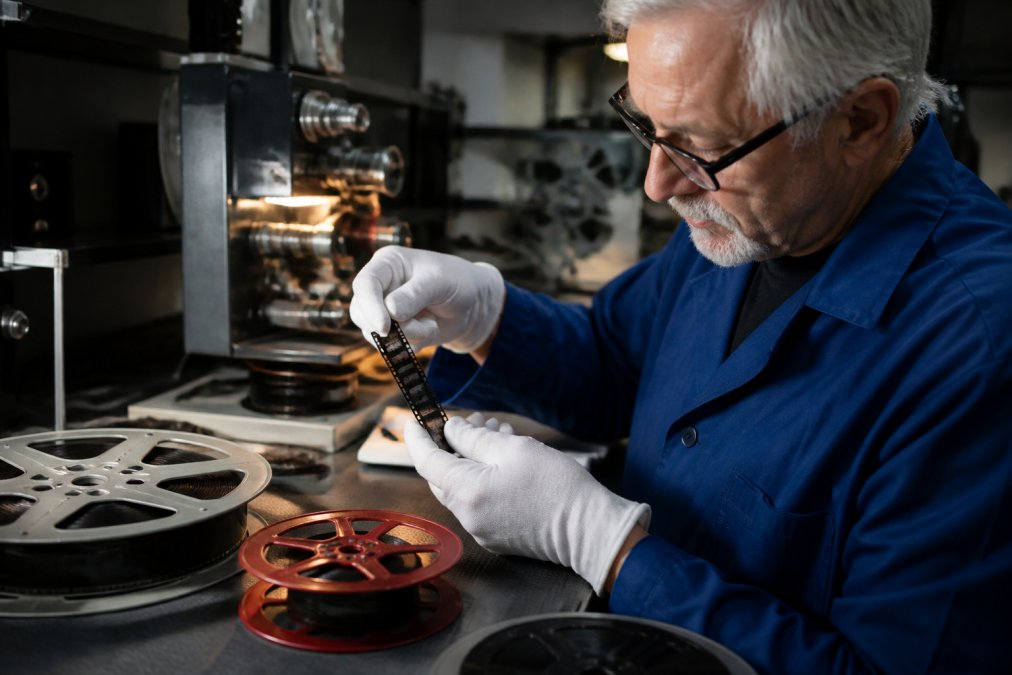
Quality operators use frame-by-frame scanning technology to capture every frame at high resolution, not simply pointing a camera at a screen. Clawless film path systems prevent damage as film moves through the scanner. They handle colour correction, remove dust and scratches, and stabilise shaky footage.
The best services address common problems with aging film: mould remediation removes fungal growth; they assess whether media can be salvaged; they understand aspect ratios, frame rates, and proper de-interlacing for modern screens.
High-end restoration goes further. These are archival-quality transformations, not simple conversions.
Professional restoration takes time because the work is meticulous. Expect several weeks for comprehensive projects. Pricing reflects expertise and equipment involved.
Cost of Digitising 8mm Film: Understanding Your Options
The cost of digitising 8mm film depends on what you’re paying for. Basic transfer is inexpensive; professional restoration with colour correction and archival preservation costs significantly more.
Base Transfer Pricing
Budget options start low. Showbiz Video Productions offers transparent pricing starting at $6 per item, making digitisation accessible for families with dozens of reels. This works well for film in decent condition without additional services.
Mid-range services like RetroMedia charge per reel or per metered foot, typically ranging from $37 for small 7.5 cm (3-inch) silent reels up to $0.55-$0.66 per foot for 8mm and 16mm film. Sound film conversion costs extra because it requires a second pass to capture and sync audio. A typical family collection of 20-30 reels could cost anywhere from a few hundred to over a thousand dollars.
Hidden Costs: Damage Assessment and Remediation
Most professional operators charge for pre-transfer assessment, typically $20-$50 per reel, to evaluate condition and identify problems before work begins.
Mould remediation is a significant cost driver. Film with visible fungal growth must be cleaned and treated before digitisation, adding $15-$40 per reel depending on severity. Vinegar syndrome (chemical deterioration of acetate film stock) cannot be reversed, but affected reels can still be digitised; the process is slower, adding 20-30 per cent to labour costs (EXTERNAL_LINK: Peer-reviewed research on acetate film deterioration | pmc.ncbi.nlm.nih.gov).
Magnetic tape with oxide shedding may require baking before transfer, adding $10-$25 per reel. Severely damaged media that cannot be recovered may still incur assessment fees.
Resolution and Output Format Premiums
High-definition output (1080p or 2K) typically costs 30-50 per cent more than standard-definition because it requires higher-grade equipment and longer processing time. Colour correction adds $5-$15 per reel for basic correction or $20-$50 per reel for frame-by-frame grading. Dust and scratch removal adds $10-$30 per reel depending on damage extent.
Format-Specific Variations
8mm silent film is least expensive to digitise. 8mm sound film costs more because audio must be captured separately and synchronised. 16mm costs more per foot than 8mm. Super 8 film may require specialised scanners and cost 20-40 per cent more than standard 8mm.
Reel size also matters. Small 7.5 cm (3-inch) reels may incur a minimum handling charge. Large 17.5 cm (7-inch) or 25 cm (10-inch) reels cost more per reel but less per foot of film.
High-End Restoration Pricing
Specialists require custom quotes based on film length, condition, desired output quality, and additional services. Expect $100-$300+ per reel for comprehensive restoration work, but output is broadcast-quality and archivally sound.
Getting an Accurate Quote
When contacting a service, provide: number of reels, estimated total footage, film format (8mm, 16mm, Super 8), whether sound is present, and visible condition (mould, brittleness, colour fading, vinegar smell). Ask whether the quoted price includes assessment, whether remediation costs are separate, and what resolution and colour correction are included. Request a sample transfer of one reel before committing to a large order.
Media Conversion Turnaround Times Across Service Providers
Showbiz Video Productions stands out with same-day service available in most cases. You can drop off media and pick up digital files the same day without sacrificing quality.
RetroMedia, based in Brisbane, typically requires several weeks depending on job size and current workload. Sound film takes longer because the two-pass process adds time.
Specialists work on longer timelines, prioritising quality and archival standards over speed. Expect weeks to months for comprehensive restoration work, especially if colour grading or digital preservation services are involved.
The trade-off is clear: fastest turnaround comes from high-volume operations. Deepest restoration comes from specialists willing to invest time in each project.
Showbiz Video Productions: Comprehensive Media Digitisation
Showbiz Video Productions has spent over 20 years converting aging media into digital files. The service covers VHS tapes, film reels, cassettes, and vinyl records. This breadth matters because most households have mixed formats, and coordinating with multiple specialists is inconvenient.
The operation emphasises transparency and affordability. Pricing starts at $6 per item with no hidden fees or minimum orders. Same-day turnaround is standard for most jobs. Professional-grade equipment handles conversion, so output quality doesn’t suffer despite the fast timeline.
For families on the Gold Coast and Brisbane with boxes of aging media, this is the practical choice: speed, affordability, and professional results without complexity.
Specialist Alternatives
For larger collections, archival ambitions, or commercial intent, specialist alternatives offer capabilities beyond basic digitisation.
Specialists operate as industry leaders in film scanning and restoration using advanced technology, equipment typically found in professional post-production facilities.
They handle 8mm, 16mm, and 35mm film. They offer consultation on storage, transport, and conservation. Turnaround and pricing require a custom quote, reflecting the bespoke nature of their work.
Other specialists focus on digital preservation and commercial revitalisation. They remove dirt, scratches, instability, and flicker from digitised film. They offer colour grading tailored to creative or commercial goals and prepare titles for broadcast, streaming, or cinema re-release.
Both specialists serve production companies, rights holders, and archives. If you’re digitising a family collection for personal use, their services are overkill. If you’re managing a film archive or preparing titles for distribution, they’re the right choice.
Choosing the Right Film Restoration Service for Your Needs
The right choice depends on what you’re digitising, why you need it digitised, and what you’re willing to spend. Before deciding on a service provider, understand the technical quality standards that separate basic digitisation from true restoration.
Understanding Quality Standards: Frame-by-Frame Scanning vs. Projection Capture
Frame-by-frame scanning is the gold standard. The film moves through a scanner one frame at a time, with each frame captured at high resolution (typically 2K or 4K for archival work). This method preserves maximum detail, allows frame-by-frame colour correction, and produces files suitable for long-term archival storage. Professional facilities use frame-by-frame scanning because it’s the only method meeting broadcast and archival standards.
Projection capture projects the film onto a screen and records the projected image with a video camera. This is faster and cheaper but loses detail. Projection capture is acceptable for personal viewing but unsuitable for archival preservation or commercial re-release.
Resolution Tiers and Their Purpose
- Standard Definition (480p): Suitable for personal viewing on older televisions. Not suitable for archival or re-release.
- HD (1080p): The practical standard for most households. Acceptable for long-term personal archival.
- 2K (2048 × 1556): The cinema standard. Used for commercial re-release, broadcast preparation, or professional archival.
- 4K (4096 × 2160): Future-proofs files against emerging display standards. Rarely necessary for home video.
For personal use, HD (1080p) is practical. For archival or commercial intent, 2K is the minimum.
File Format Decisions: Choosing for Long-Term Accessibility
MP4 is most common because it’s widely compatible and files are small. However, MP4 uses lossy compression, permanently discarding image data. For personal viewing, this is fine. For archival, it’s problematic.
MOV (QuickTime) can use either lossy or lossless compression. Ask whether the MOV file uses ProRes or another lossless codec; if it uses H.264, it’s lossy and unsuitable for archival.
ProRes is a professional codec designed for post-production and archival. Files are larger than MP4 but use lossless or visually lossless compression, preserving maximum detail. ProRes is the standard for broadcast and archival work.
DPX (Digital Picture Exchange) is the true archival standard. Each frame is stored as a separate uncompressed image file. DPX is used by film archives because it’s format-agnostic and can be re-encoded into any future format without quality loss.
For personal use, MP4 or MOV is acceptable. For anything you plan to keep for decades or re-purpose commercially, insist on ProRes or better.
Storage and Backup: What Happens After Digitisation
Never rely on a single hard drive. A professional digitisation service should deliver files on at least two separate drives or recommend a backup strategy. Cloud storage provides geographic redundancy but may not suit very large files or privacy concerns. The best approach is the 3-2-1 rule: keep three copies of files on two different types of media, with one copy stored off-site. For guidance on data management, organisations like the National Archives of Australia provide best practices for digital preservation.
File format matters here too. If you receive MP4 files, you’re dependent on MP4 remaining playable. If you receive ProRes, you have more flexibility. If you receive DPX, you have maximum future-proofing.
Decision Framework: Matching Service to Purpose
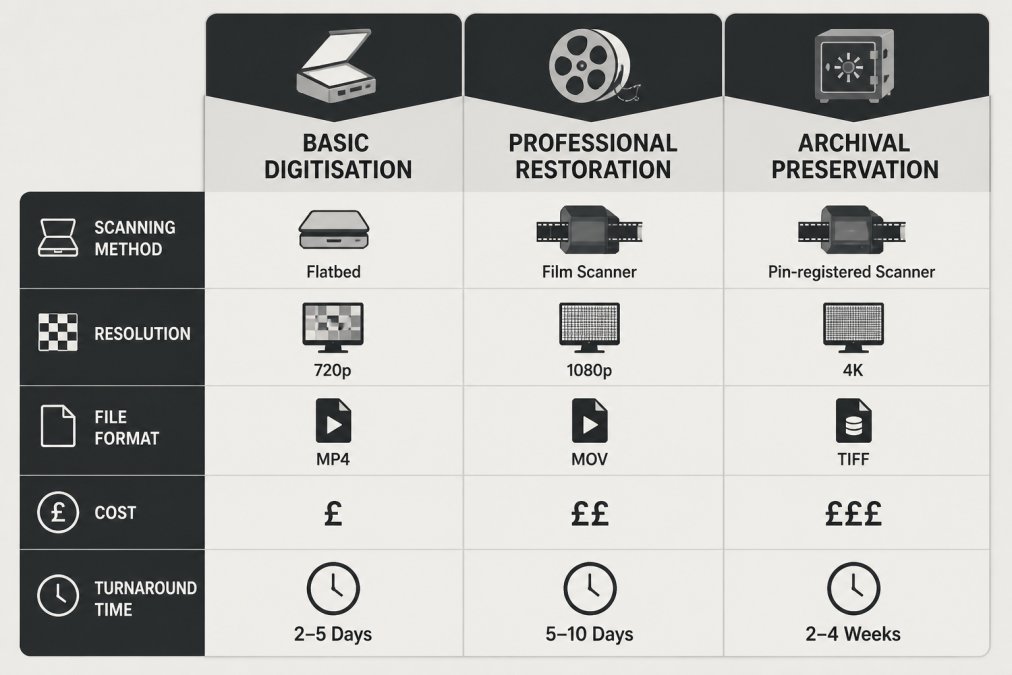
Choose Showbiz Video Productions if you have a mixed collection of formats, you want results fast, and you’re on a budget. Same-day turnaround and transparent pricing make this practical for most households. Confirm they offer at least HD (1080p) output and ask what file format they deliver. Best for: personal viewing and casual sharing.
Choose RetroMedia if you want a Brisbane-based operator with transparent methods and high-definition output. They’re a good middle ground between high-volume operations and archival specialists. Ask whether they use frame-by-frame scanning and what file formats they offer. Best for: families wanting quality without premium pricing.
Choose a specialist if you’re managing a significant film archive, you need broadcast-quality output, or your collection has historical or commercial value. Their frame-by-frame scanning and 2K resolution justify the cost and wait time. Best for: commercial re-release, broadcast preparation, or institutional archival.
Choose another specialist if your goal is commercial revitalisation or long-term digital preservation. You’re preparing media for a second life through distribution, re-release, or archival access. Best for: professional projects with re-use intent.
The Quality Question You Must Ask Every Service
Before committing, ask:
- Do you use frame-by-frame scanning or projection capture? (Frame-by-frame is superior.)
- What resolution do you offer, and what does the base price include? (Confirm at least 1080p for personal use, 2K for archival.)
- What file format will I receive, and is it suitable for long-term storage? (Insist on ProRes or better for anything you plan to keep for decades.)
The answers reveal whether a service is thinking about your actual needs or just processing volume.
Conclusion
Film restoration alternatives have evolved well beyond a single option. You can choose based on speed, cost, expertise, or specialisation. For most families with aging home video collections, Showbiz Video Productions delivers the practical solution: professional digitisation with same-day turnaround and transparent pricing starting at $6 per item. Your memories deserve to be preserved, and you shouldn’t have to wait weeks or pay premium prices to make that happen. Get a quote from Showbiz Video Productions today and transform your aging media into digital files you can share, store safely, and enjoy for generations.
Frequently Asked Questions
Q: What makes professional film restoration services better than DIY conversion?
A: Professional film restoration services use archival-quality equipment and expertise to handle deteriorating media safely. They perform frame-by-frame scanning, mould remediation, and colour correction, tasks that DIY equipment cannot achieve. Professional operators understand how to work with fragile magnetic tape and film reels without causing further damage. They also deliver output in formats optimised for long-term preservation and modern playback, ensuring your digitised content remains accessible for generations.
Q: How much does it typically cost to digitise 8mm film?
A: Cost of digitising 8mm film varies by service provider and project scope. Pricing depends on the number of reels, film condition, whether audio is present, and desired output quality. Some services charge per reel, others per foot of film. Basic silent film conversion typically starts at lower price points, while sound film and restoration work costs more. Visit individual service websites or request a quote based on your specific media collection to get accurate pricing for your needs.
Q: What file formats should I expect from professional film restoration?
A: Professional film restoration services typically deliver files in modern, widely-compatible formats such as MP4 or MOV. High-definition output at 1080p or 4K resolution is standard with quality providers. The choice of codec and bitrate affects both file size and playback compatibility. Ask your service provider about output options before committing, you’ll want files that play on your TV, computer, and can be easily shared with family. Future-proof formats ensure your digitised memories remain accessible as technology evolves.
Q: How long does professional film restoration typically take?
A: Media conversion turnaround times vary significantly. Some services offer same-day or next-day turnaround for small jobs, whilst others require several weeks depending on workload and project complexity. Large collections, film requiring restoration work, or audio synchronisation add time. Ask your chosen provider about their current turnaround times before sending media. Faster service may cost more, but knowing the timeline helps you plan, especially if the media contains irreplaceable family memories.
Q: Can professional services handle multiple formats in one project?
A: Yes, most professional film restoration services handle mixed media collections. They work with VHS tapes, 8mm and 16mm film reels, audio cassettes, vinyl records, and slides. However, each format may require different equipment and processing. Some providers charge by format, others offer bundled pricing. Showbiz Video Productions, for example, converts all these formats with professional-grade equipment. Consolidating your entire collection with one provider often simplifies the process and ensures consistent quality across all your digitised memories.
This article was written using GrandRanker