
Table of Contents
- Will Old VHS Tapes Degrade Over Time?
- How Magnetic Tape Degradation Works
- Environmental Factors Affecting Tape Longevity
- Signs of VHS Tape Mould and Physical Degradation
- How to Preserve Degrading Family Tapes
- The Role of VCR Maintenance in Tape Health
- VHS to Digital Conversion: Protecting Your Memories
- Conclusion
Last Updated: August 24, 2026
Will Old VHS Tapes Degrade Over Time?
Yes, old VHS tapes will degrade over time. The magnetic particles storing your video footage don’t last forever, and the materials binding them together break down through a process understood for decades. The question isn’t whether degradation happens, but how quickly and what you can do to slow it down. A tape stored in a cool, dry closet will last longer than one exposed to heat and humidity, but all will eventually reach a point where playback becomes difficult or impossible.
How Magnetic Tape Degradation Works
VHS tapes store video information using magnetic particles suspended in a binder layer on a plastic substrate. When you play a tape, the VCR head reads these particles and converts them into an electrical signal. This system is fundamentally fragile: the magnetic charge fades over time, the binder deteriorates, and the physical tape becomes brittle.
Remanence Decay and Signal Loss
Remanence decay is the gradual loss of magnetic charge in the particles storing your video data. Over years and decades, the magnetic particles’ ability to retain magnetisation weakens. As remanence decays, the signal-to-noise ratio decreases, causing the VCR to work harder to read information. You might notice increased static, colour shifts, or image breakup. This process accelerates when tapes are exposed to heat, humidity, or magnetic fields.
Many tapes recorded in the 1980s and early 1990s now show measurable signal loss. Tapes from the late 1970s are often severely degraded or completely unplayable, not due to poor manufacturing, but simply the nature of magnetic media.
Binder Hydrolysis and Oxide Shedding
The magnetic particles on a VHS tape are held in place by a binder, a polymer layer acting as adhesive. Over time, this binder breaks down through binder hydrolysis. Water molecules from the air penetrate the binder and cause it to lose cohesion. When the binder fails, magnetic particles literally shed off the tape.
When binder hydrolysis occurs, you might see residue on VCR heads after playing, or notice the tape surface looks dull or flaky. Oxide shedding is the visible result of binder failure, magnetic particles separate from the substrate and accumulate on VCR heads and guides. This creates a vicious cycle: fewer magnetic particles remain to store the signal, so playback quality degrades further.
The rate of binder hydrolysis depends almost entirely on environmental conditions. A tape stored in a stable, dry environment might take 30-40 years to show significant degradation (peer-reviewed research). The same tape stored in a humid basement could show problems within 5-10 years.
Environmental Factors Affecting Tape Longevity
Storage environment is the single most important factor determining how long your VHS tapes remain playable. Unlike digital files stored on redundant servers, physical media cannot escape its environment.
Temperature and Humidity Impact
Magnetic tape is sensitive to both heat and moisture. High temperatures accelerate chemical degradation: remanence decay happens faster, binder hydrolysis accelerates, and the plastic substrate becomes more brittle. Humidity introduces water vapour into the binder layer, directly causing hydrolysis.
The ideal storage environment is cool and dry: temperatures between 15°C and 20°C, with humidity between 30% and 40% (loc.gov). Every 10°C increase in temperature roughly doubles the rate of chemical degradation (peer-reviewed research). A tape stored in a warm attic (reaching 40°C in summer) will degrade 4-8 times faster than one stored in a climate-controlled room at 18°C.
Humidity above 60% accelerates binder hydrolysis significantly. Basements and garages, where many store old media, often have humidity levels of 70% or higher. Fluctuating temperatures are worse than consistently high temperatures, when temperature changes, the tape expands and contracts, weakening the binder and causing tape tension problems.
Mold Growth and Storage Conditions
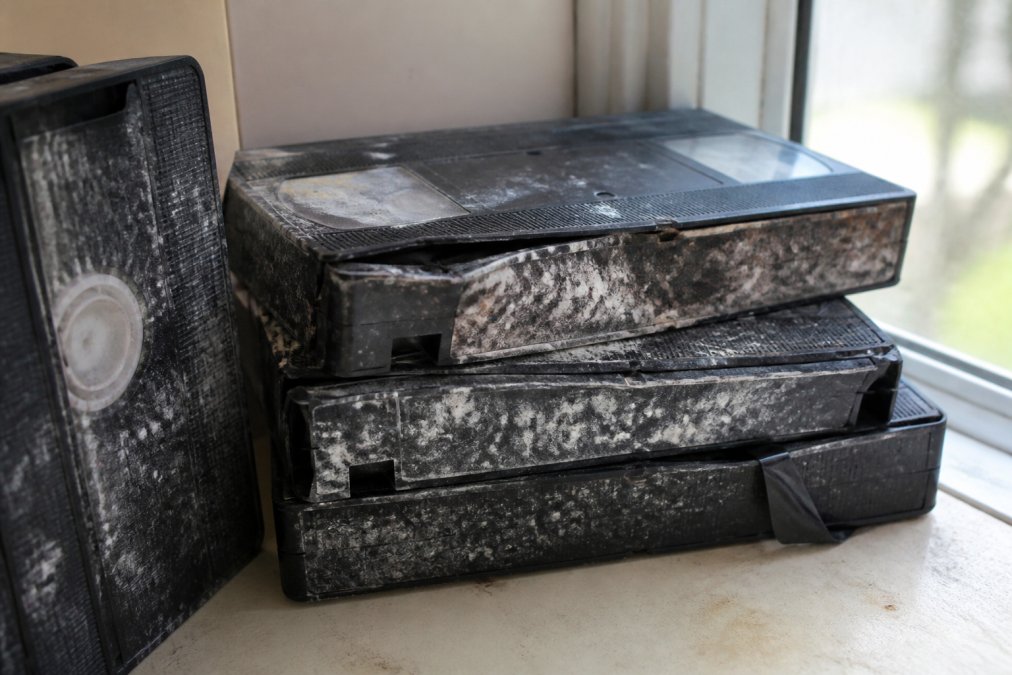
Mold thrives in warm, humid environments and penetrates tape layers, feeding on binder material and accelerating hydrolysis. Mold appears as discolouration: brown, black, or green spots on the tape surface or inside the cassette. Once present, it’s nearly impossible to remove without risking further damage.
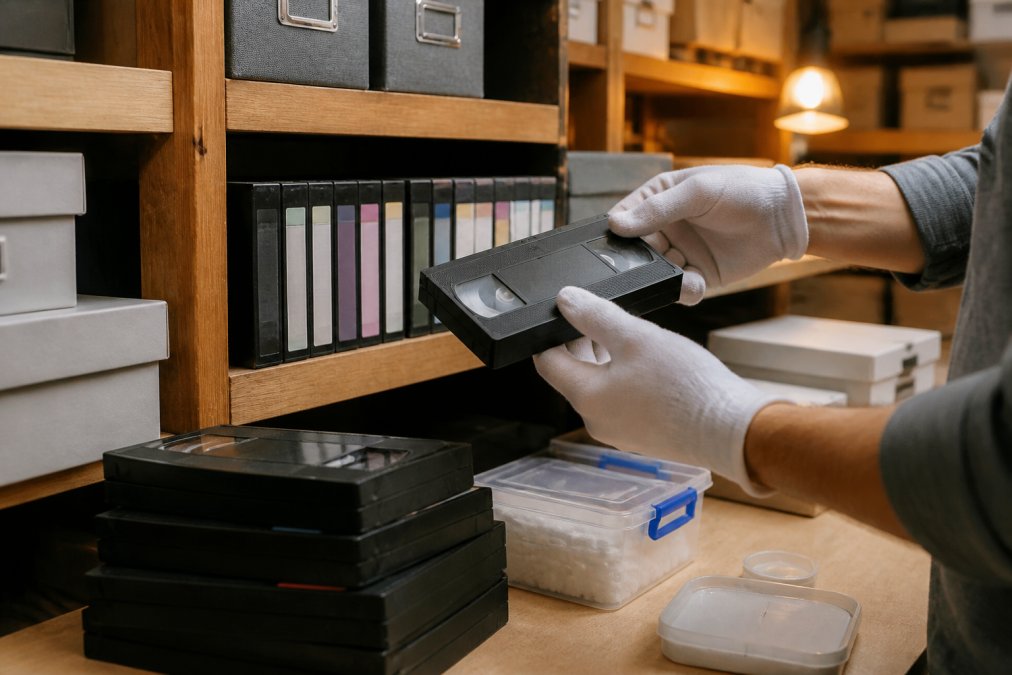
Tapes stored in sealed plastic containers without ventilation trap moisture and create microenvironments encouraging mold growth. The best approach uses archival-quality boxes in climate-controlled spaces, ideally with silica gel packets to absorb excess moisture.
Signs of VHS Tape Mould and Physical Degradation
Before deciding whether a tape is worth digitising, assess its condition. Some tapes are still perfectly playable; others are on the verge of becoming unreadable.
Visual Indicators of Tape Damage
Inspect the physical cassette and tape carefully. Look for discolouration on the tape itself, brown, tan, or greenish tones indicate oxidation or mold. Check the cassette for cracks, warping, or brittleness. If the plastic feels fragile or snaps easily, the acetate or polyester base has become brittle from age and environmental stress.
Open the cassette carefully and examine the tape spool. The tape should be wound evenly and smoothly. Lumpy winding, uneven tension, or warping indicate playback problems. Look for visible debris, dust, or flaking material on the tape surface. Flaking indicates oxide shedding and binder failure. Any visible mold means the tape has been stored in high humidity and is at serious risk.
Audio and Playback Quality Changes
Play the tape if you have a working VCR. Listen for audio quality issues: muffled audio, dropouts, or increased hiss all indicate signal loss. Watch for video problems: colour shifts, increased static, pixelation, or image breakup. Track loss is common in degraded tapes, you might notice one audio track has disappeared or become unintelligible while the main track still plays.
Just because a tape plays doesn’t mean it’s stable. Many tapes that seem fine today might become unplayable within a few years. If a tape is more than 25-30 years old, its remaining lifespan is likely measured in years, not decades.
How to Preserve Degrading Family Tapes
If you’re not ready to digitise yet, steps can slow degradation and extend playable life. These aren’t permanent solutions, magnetic media will always degrade eventually, but they can buy you time.
Proper Storage and Climate Control
Store tapes upright in a cool, dry location. Attics and basements are the worst possible places; temperature and humidity fluctuate wildly. A closet inside your home, away from external walls, is significantly better. The ideal storage space maintains consistent temperature between 15°C and 20°C and humidity between 30% and 40%.
Use archival-quality storage boxes, not standard plastic containers. Store tapes in the dark; light can degrade the cassette shell and contribute to binder degradation. Include silica gel packets in storage boxes to absorb excess moisture, replacing them every 6-12 months. Store tapes vertically, not stacked flat, to avoid warping and tape tension problems. Keep tapes away from magnetic fields generated by televisions, computers, and speakers.
Handling and Maintenance Best Practices
Handle tapes by the cassette shell only, never by the exposed tape itself. Oils from your skin can damage magnetic particles and binder. If you must rewind or fast-forward, do so slowly and gently.
If a tape has been stored in cold conditions, allow it to warm to room temperature before playing. Playing a cold tape can cause condensation inside the cassette, promoting mold growth and damaging VCR heads. Wait at least an hour after bringing a tape from cold storage before playback.
Don’t play tapes repeatedly. Every playback causes VCR heads to make contact with magnetic particles, accelerating oxide shedding and binder hydrolysis. If you have a favourite tape, digitise it and watch the digital copy instead. If a tape shows signs of degradation, audio dropouts, video breakup, or mold, stop playing it immediately.
The Role of VCR Maintenance in Tape Health
Your VCR is as important as the tapes themselves. A poorly maintained VCR can damage tapes, while a well-maintained player extends playback life and reduces breakage risk.
VCR heads should be cleaned regularly if you’re playing tapes frequently. Dust and oxide particles accumulate on heads over time, causing audio dropout, video breakup, and increased friction that damages tapes. Check the tape guides and rollers inside the VCR, these should be smooth and free of debris. Rough or corroded guides can scratch tapes and cause tracking problems.
Ensure the tape tension mechanism works properly. If a tape plays with uneven tension, the VCR’s tension system may be failing. Store your VCR in a clean, dust-free environment. Don’t wait until your VCR breaks completely to digitise your tapes, once VCRs become truly obsolete, finding one that works will be nearly impossible.
VHS to Digital Conversion: Protecting Your Memories
Digitisation is the only reliable way to preserve VHS tape content long-term. Digital files don’t degrade like magnetic media. A properly stored digital file can remain playable indefinitely, as long as you maintain it on current storage media and migrate it as technology changes.
When Digitisation Becomes Essential
If a tape shows visible signs of degradation, discolouration, mold, or audio/video quality problems, digitisation should be your priority. The longer you wait, the more content you risk losing. A barely playable tape today might be completely unreadable in two years.
Even if a tape seems fine now, if it’s more than 25 years old, its remaining lifespan is probably limited. Digitising older tapes now ensures you capture content while still accessible. Consider digitising your entire collection, not just damaged tapes. Digitisation costs have become increasingly affordable, and the peace of mind of having memories safely converted to digital format is invaluable. Showbiz Video Productions offers professional-grade digitisation with same-day turnaround in most cases.
Assessing Tape Condition Before Conversion
Before sending tapes for digitisation, assess their condition. Test playback if possible and note any audio or video quality issues, dropouts, or problems. If you can’t play the tape yourself, describe what you know about its storage history and any visible damage. This information helps the digitisation service adjust equipment settings and handling procedures to get the best possible result.
Check for physical damage: cracks in the cassette, warping, or visible mold. Let the digitisation service know about these issues upfront. Don’t attempt to repair or clean a damaged tape yourself, professional digitisation services have the right equipment and expertise to handle fragile tapes safely.
VHS tapes are slowly disappearing through both physical degradation and technological obsolescence as VCRs become obsolete. The window for preserving your family’s video memories is closing. Every year, more tapes become unplayable and fewer working VCRs remain available for digitisation.
The solution is straightforward: digitise your tapes now, while they’re still playable and professional digitisation services are readily available. Showbiz Video Productions has over 20 years of experience converting VHS, film reels, and other legacy formats into high-quality digital files. We handle your precious memories with professional-grade equipment and offer same-day turnaround in most cases. Get a quote today and start preserving your family’s irreplaceable footage before it’s too late.
Frequently Asked Questions
Q: How long do VHS tapes actually last?
A: VHS tapes typically remain playable for 15 to 25 years under ideal storage conditions, though some can last longer. The lifespan depends heavily on how they're stored, temperature fluctuations, high humidity, and exposure to light accelerate degradation. Many tapes recorded in the 1980s and 1990s are now showing signs of serious decline, including signal loss and mould growth. If your tapes are approaching two decades old, degradation has likely begun, even if they still play.
Q: What are the signs of VHS tape mould?
A: Mould appears as visible discoloration on the tape surface, cassette housing, or inside the reel area, typically white, grey, or dark spots. You may also notice a musty odour when opening the cassette. Sticky shed syndrome, where the binder layer breaks down and sheds oxide particles, often accompanies mould growth. If you see discoloration or smell dampness, the tape is at risk of unplayable footage loss and should be handled carefully to avoid spreading contamination to other tapes.
Q: Can I fix a degraded VHS tape?
A: Once degradation begins, through binder hydrolysis, oxide shedding, or mould growth, the damage cannot be reversed. However, professional digitisation can recover playable footage before complete failure occurs. If a tape shows early signs of brittleness, discoloration, or muffled audio, digitisation should be prioritised immediately. VCR head cleaning and proper playback equipment maintenance can help extract video signal from tapes in marginal condition, but this is a temporary measure, not a cure.
Q: How should I store VHS tapes to prevent degradation?
A: Store tapes in a climate-controlled environment at 16-20°C with humidity between 30-40%. Keep them upright in archival storage boxes away from direct sunlight, heat sources, and damp areas. Avoid basements, attics, and garages where temperature and humidity fluctuate. Regular inspection for early signs of mould or brittleness allows you to digitise at-risk tapes before they become unplayable.
This article was written using GrandRanker