
Table of Contents
- Why Your Family Tapes Are Degrading Right Now
- Signs of Tape Degradation You Need to Know
- Best Storage Conditions for Magnetic Media
- How to Assess Your Tapes Before Digitising
- DIY Restoration Techniques for Moldy or Sticky Tapes
- VHS to Digital Conversion Service: When to Go Professional
- Long-Term Digital Storage Strategies
- Frequently Asked Questions
Last Updated: September 27, 2026
Why Your Family Tapes Are Degrading Right Now
Your VHS tapes, film reels, and cassettes are breaking down. This isn’t a matter of if, it’s a matter of when. The magnetic tape inside degrades chemically over time, and the process accelerates depending on storage conditions. At Showbiz Video Productions, we’ve helped families preserve degrading family tapes before it’s too late, and the science behind the degradation is straightforward.
Magnetic tape relies on a binder that holds metallic particles to the plastic base. This binder breaks down through a process called hydrolysis, where moisture in the air reacts with the binder chemicals. Heat, humidity, and temperature fluctuations speed this up dramatically.
Signs of Tape Degradation You Need to Know
Recognising the warning signs early gives you time to act. Some degradation is visible. Other signs only show up when you try to play the tape. Here’s what to look for before your memories disappear.
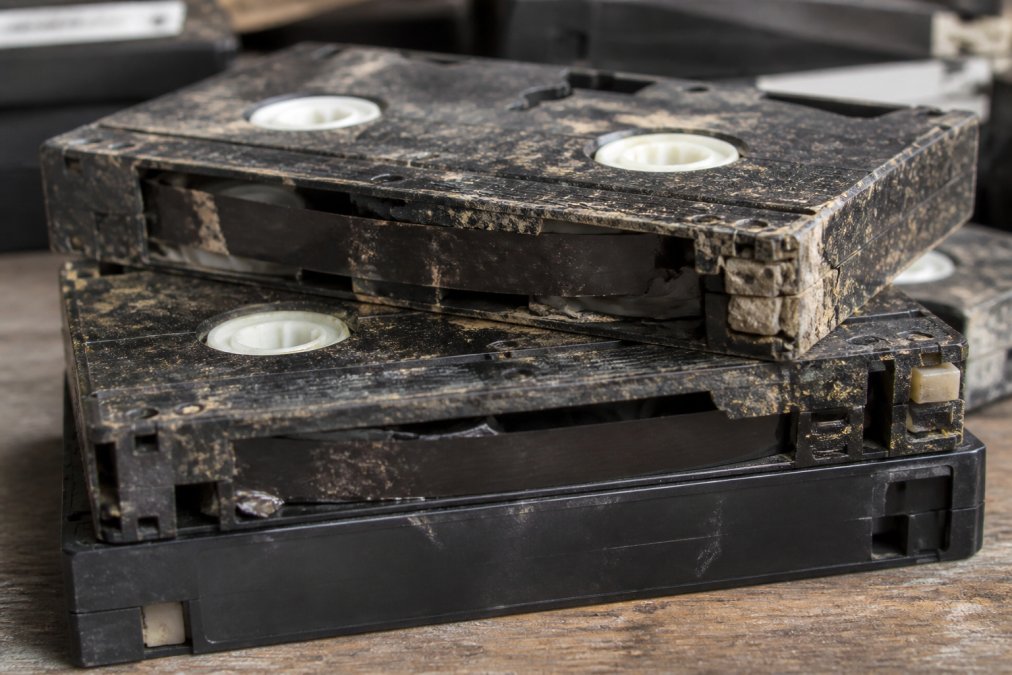
Tape Adhesion Syndrome and Other Chemical Failures
Tape adhesion syndrome occurs when the binder holding the magnetic particles starts to break down. The tape becomes sticky and gummy. When you try to play it, the tape sticks to the playhead and can snap or shed its coating. This is one of the most common reasons tapes become unplayable.
You’ll notice this if you open a cassette and see:
- A sticky, gooey residue on the reels or tape edges
- Tape that feels tacky to the touch
- A vinegar-like smell coming from the cassette
Best Storage Conditions for Magnetic Media
How you store your tapes right now determines how much longer they’ll last. The environment matters far more than most people realise. Magnetic media is sensitive to temperature swings, humidity, and physical stress.
Temperature and Humidity Control
Keep your tapes in a cool, dry space. The ideal temperature range is 16-20°C with relative humidity between 30-40%. Avoid basements, attics, and garages where temperature and humidity fluctuate wildly.
Physical Handling and Organisation
Store tapes upright on shelves, not stacked flat. Stacking creates pressure that warps the reels and damages the tape pack. Use archival-quality storage boxes if you have them, avoid cardboard that absorbs moisture.
Keep tapes away from:
- Magnetic fields (speakers, televisions, hard drives)
- Direct sunlight
- Dust and debris
- Extreme temperatures
How to Assess Your Tapes Before Digitising
Before you commit to preserving degrading family tapes through digitisation, assess what you have. Some tapes are salvageable. Others are too far gone to recover anything usable. A quick inspection tells you which is which.
Visual Inspection Checklist
Open the cassette housing carefully and examine the tape itself. Look for:
- Mould or discolouration on the tape or reels
- Visible cracks, warping, or tape pack separation
- Sticky or gummy residue
- Oxide shedding (tape looks dull or chalky instead of shiny)
- Broken or missing leader tape
- Loose or damaged reels
Testing Playback (If You Still Have Equipment)
If you still have a working VCR or cassette player, test a small section of the tape. Play it for 30 seconds to a minute. Listen for audio dropouts, visual glitches, or tracking problems.
Warning signs during playback include:
- Severe picture noise or green pixels
- Audio that cuts in and out
- Picture that rolls or tears
- Tape that sounds like it’s slipping or dragging
DIY Restoration Techniques for Moldy or Sticky Tapes
Before committing to professional digitisation, you can attempt safe, non-destructive restoration for minor tape issues. These techniques won’t reverse chemical damage, but they can sometimes restore temporary playability or halt degradation long enough to digitise. The key is understanding what each method does and when to stop.
Moisture Removal for Light Mould and Humidity Damage
If a tape shows early signs of mould or has been stored in a damp environment, moisture removal can slow or temporarily reverse adhesion syndrome.
Silica gel conditioning (24-48 hours):
- Place the cassette in a sealed, airtight container with food-grade silica gel packets (the same desiccant used in vitamin bottles or electronics packaging).
- Ensure the cassette does not touch the silica directly; place it on a shelf or platform inside the container.
- Leave sealed for 24-48 hours at room temperature (18-22°C).
- The silica absorbs moisture from the air inside the cassette, which can slow mould growth and temporarily reduce stickiness.
Controlled Heat Treatment for Adhesion Syndrome
Tape adhesion syndrome (sticky binder) can sometimes be temporarily reversed through gentle heat, which drives out moisture trapped in the binder layer. This is a last-resort technique, use it only when the tape is unplayable and you have nothing to lose.
The process:
- Place the cassette in a sealed, moisture-proof bag (a ziplock bag works).
- Include a small packet of silica gel inside the bag with the cassette.
- Place the sealed bag in a warm environment: a car parked in sunlight, a loft space, or a room with a space heater set to maintain 40-45°C.
- Leave for 12-24 hours. Do not exceed 50°C; excessive heat can warp the plastic cassette housing or damage the tape permanently.
- Remove and allow to cool to room temperature before opening.
Cleaning Mould from Cassette Housing
Mould on the exterior or inside the plastic housing is cosmetic but can spread to other tapes and equipment. Light mould can be safely removed; heavy mould requires professional handling.
For light surface mould:
- Wear disposable gloves and a dust mask (mould spores are a respiratory hazard).
- Use a soft, dry cloth to gently wipe the affected area.
- Do not use water, vinegar, or cleaning solutions, moisture accelerates mould growth.
- If mould is inside the cassette housing, do not attempt to open it yourself; opening can damage the tape pack and spread spores.
For heavy mould (black, fuzzy, or widespread):
- Quarantine the tape in a sealed bag.
- Do not attempt DIY cleaning; mould this advanced can damage playback equipment and contaminate your workspace.
- Contact a professional restoration service. They have sealed environments and antifungal treatments designed for archival media.
When to Stop and Call a Professional
DIY restoration has hard limits. Stop and seek professional help if:
- The tape has a strong vinegar smell (vinegar syndrome is irreversible at home).
- The tape is visibly brittle, cracked, or separating from the reel.
- Heavy mould is present inside the cassette.
- The tape has already been partially played and is shedding oxide (the magnetic coating).
- You’ve attempted heat treatment and the tape still won’t play after 48 hours.
Professional equipment can often recover content from tapes that DIY methods cannot salvage.
VHS to Digital Conversion Service: When to Go Professional
DIY techniques buy time, but they don’t solve the underlying problem. Professional digitisation is the only way to permanently preserve degrading family tapes. Professional services have equipment and expertise that home setups cannot match.
What Professional Equipment Can Do
Professional digitisation equipment reads tapes at a much higher quality than consumer VCRs. It can recover content from tapes that won’t play on home equipment. The hardware is designed to handle damaged or sticky tapes without causing further damage.
Choosing the Right Format for Long-Term Storage
Showbiz Video Productions can advise on the best format for your needs. The goal is a file format that will still be playable 20 or 30 years from now.
Long-Term Digital Storage Strategies
Digitisation solves the immediate problem, but digital files have their own preservation challenges. Bit rot, file format obsolescence, and storage media failure can all destroy digital copies if you’re not careful.
Avoiding Bit Rot and File Format Obsolescence
Bit rot occurs when storage media degrades and individual data bits flip from 1 to 0 (or vice versa). Hard drives fail. USB sticks degrade. Cloud storage companies go out of business or change terms. No single storage method is permanent.
Example:
- Copy 1: External hard drive at home
- Copy 2: USB drive in a safe deposit box
- Copy 3: Cloud storage with a reputable provider
Backup and Redundancy Planning
Create a backup schedule. Every year, check your digital copies. Verify that files still play correctly. Test your backups to make sure they’re actually readable.
Frequently Asked Questions
Can degraded VHS tapes be restored?
Partially degraded tapes can often be recovered through professional digitisation, even if playback equipment is no longer available. However, severely degraded magnetic tape, such as tapes affected by tape adhesion syndrome or advanced mould, may have permanent signal loss. Professional equipment can sometimes extract usable video from tapes that standard VCRs cannot read. The earlier you digitise, the better the chances of preserving the content. For tapes showing signs of tape degradation, immediate action prevents further loss.
What is the best way to preserve old VHS tapes?
Store tapes upright (not stacked flat) in a cool, dry environment between 16-21°C with relative humidity of 30-40%. Keep them away from magnetic fields, direct sunlight, and heat sources. Handle tapes by their casing only, never touching the magnetic tape itself. Check storage conditions regularly and inspect tapes for signs of mould or warping. The most effective preservation method is digitisation, converting your tapes to digital files ensures your memories survive regardless of physical tape degradation.
What are the signs of tape adhesion syndrome?
Tape adhesion syndrome occurs when the tape binder deteriorates and layers of magnetic tape stick together. Signs include a squealing or grinding sound when the tape plays, visible layers of tape peeling or flaking, a sticky residue on the tape, or the tape becoming stuck inside the cassette. This chemical failure is common in tapes stored in warm, humid conditions and is largely irreversible. Once adhesion syndrome begins, the tape will continue to degrade. Professional digitisation should be arranged immediately if you suspect this problem.
How should I store family tapes to prevent further damage?
Store tapes upright in archival-quality boxes away from heat, humidity, and magnetic fields. Maintain a stable temperature (ideally 16-21°C) and humidity level (30-40%) to slow degradation. Keep tapes in a dark location to prevent light exposure. Avoid basements, attics, and garages where temperature and humidity fluctuate. Label tapes clearly and create a storage inventory. Most importantly, digitise your most precious tapes now, digital files stored with proper backup strategies offer the most reliable long-term preservation for your family memories.