
Table of Contents
- Why Proper Storage Matters for VHS Tapes
- Temperature and Humidity: The Foundation of VHS Preservation
- Choosing the Right Storage Containers and Organisation
- Protecting Against Light, Magnetic Fields, and Environmental Hazards
- Signs of VHS Tape Mould and Chemical Degradation
- How to Preserve Degrading Family Tapes Before It’s Too Late
- When to Consider VHS to Digital Conversion Services
- Conclusion
- Frequently Asked Questions
Last Updated: September 1, 2026
Why Proper Storage Matters for VHS Tapes
Your family’s treasured memories are stored on magnetic tape that degrades every day it sits on a shelf. Unlike digital files that remain unchanged, VHS tapes are vulnerable to heat, humidity, light, and time itself. How you store old VHS tapes determines whether those recordings survive another decade or become unwatchable within years.
The problem is that most people treat VHS storage like it doesn’t matter. Boxes get shoved into attics, basements, or garage corners without a second thought. But these environments are actually hostile to magnetic media. Temperature swings cause the tape itself to expand and contract. Moisture encourages mould growth that eats through the coating. Dust settles into the mechanisms. Within five to ten years, tapes stored this way often develop serious problems: audio dropout, video distortion, complete playback failure.
At Showbiz Video Productions, we’ve worked with hundreds of families who discovered their VHS collections were damaged or degrading beyond recovery. Many had stored tapes for decades in conditions that seemed reasonable at the time. The tapes looked fine on the shelf, but when they finally tried to play them, the damage was already done. By then, digitisation became much harder, sometimes impossible without professional equipment and restoration techniques.
The good news is that proper storage is straightforward. It requires understanding five core principles: temperature control, humidity management, container selection, environmental protection, and regular monitoring. This guide walks through each one, showing you exactly how to store old VHS tapes so your memories remain intact for decades.
Temperature and Humidity: The Foundation of VHS Preservation
Ideal Storage Conditions
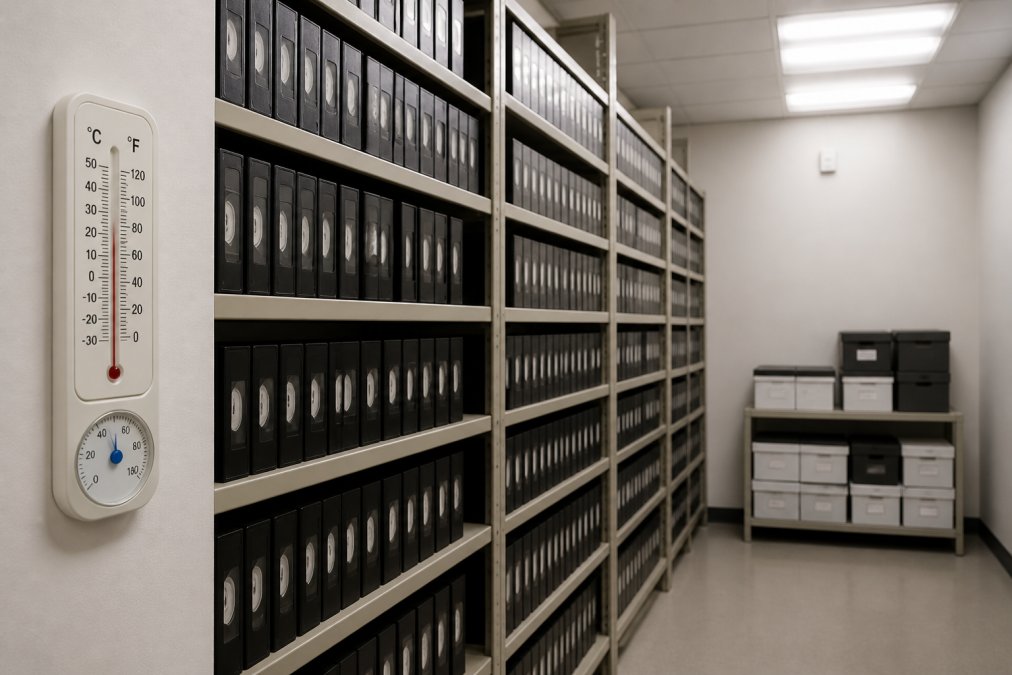
The magnetic coating on VHS tape is sensitive to temperature and moisture. Extreme conditions accelerate degradation; stable conditions slow it dramatically. The ideal environment keeps temperature between 16 and 24 degrees Celsius and relative humidity between 30 and 40 percent (loc.gov).
This range matters because it’s where tape materials remain stable. Cooler is generally better, lower temperatures slow chemical reactions that degrade the magnetic particles. However, temperatures below 10 degrees can introduce other problems, particularly when tape is moved between cold and warm spaces. Humidity below 30 percent creates static electricity risk and can make tape brittle (peer-reviewed research). Above 50 percent, moisture becomes a mould risk.
Most homes don’t naturally maintain these conditions. A bedroom closet in summer might hit 28 degrees and 55 percent humidity. A basement in winter drops to 8 degrees and 45 percent. Neither is ideal. The solution is finding or creating a climate-controlled space: an interior room with consistent temperature, away from heat sources and exterior walls that allow temperature swings.
Avoiding Thermal Expansion and Tape Degradation
Temperature fluctuations do two things to VHS tape. First, they cause the plastic cassette shell and the tape itself to expand and contract at slightly different rates. Over dozens of heating and cooling cycles, this creates stress on the tape path and can cause the tape to slip inside the cassette. Second, heat accelerates the chemical breakdown of the magnetic coating itself.
This is why attics and basements are particularly risky. Attics can swing from 15 degrees in winter to 40 degrees in summer (energy.gov). Basements often stay cool but experience humidity spikes when outdoor air warms and moisture condenses on cool surfaces. Garages are worse, they see even wider temperature swings and exposure to dust and fumes.
A climate-controlled room with consistent temperature, even if it’s slightly warmer than ideal, is far better than a room that fluctuates wildly. Consistency matters more than perfection. If your storage space stays at 26 degrees year-round, your tapes will degrade more slowly than if they swing between 10 and 30 degrees, even though 26 degrees is above the ideal range.
Choosing the Right Storage Containers and Organisation
Vertical vs. Horizontal Orientation
VHS tapes should be stored vertically, standing upright like books on a shelf. This orientation distributes the tape’s weight evenly across the spool and prevents the tape from sagging or bunching inside the cassette. Horizontal storage, tapes lying flat, concentrates pressure on one edge of the tape, which can cause warping and uneven tension over months or years.
Vertical storage also makes inspection easier. You can see the spine labels without moving boxes, and you can spot early signs of damage like discolouration or mould spots. If tapes are stacked horizontally in a box, problems often go unnoticed until playback fails.
The only exception is very short-term storage during transport. If you’re moving tapes from one location to another, horizontal positioning for a few hours won’t cause damage. But for any storage lasting weeks or longer, vertical is essential.
Airtight Containers and Polypropylene Cases
Store tapes in airtight plastic containers or polypropylene storage bins. These protect against dust, insects, and moisture fluctuations. Cardboard boxes deteriorate over time and offer no moisture barrier. Wooden crates can off-gas chemicals and absorb moisture. Metal containers can rust and trap condensation.
Polypropylene is the preferred material because it’s chemically inert and won’t react with tape materials. Clear containers let you see contents without opening them, which is helpful for inventory and condition checks. Opaque containers work equally well if they’re genuinely airtight.
The container itself isn’t enough. Inside the container, keep each tape in its original plastic case if possible. If the original case is damaged, use a new polypropylene VHS case. These cases protect the tape from dust and physical damage. Never store tapes loose in a bin.
For larger collections, consider archival-grade storage boxes designed specifically for magnetic media. These are more expensive but engineered to maintain stable internal conditions and prevent off-gassing from box materials. For small family collections, standard polypropylene storage containers work well if they’re kept in a climate-controlled space.
Protecting Against Light, Magnetic Fields, and Environmental Hazards
Avoiding Direct Sunlight and UV Radiation
Ultraviolet light damages the plastic casing and can fade tape labels, but more importantly, prolonged exposure to sunlight indicates the storage space is warm. Sunlit rooms experience temperature swings and heat buildup that accelerate tape degradation. Store tapes in a dark interior room, away from windows.
UV radiation from fluorescent lights is minimal but still worth avoiding. Use incandescent or LED lighting instead. The real concern is heat from any light source. Keep storage areas cool and dark.
Keeping Tapes Away from Magnetic Fields and Electronics
Magnetic fields can partially erase or distort the recorded signal on tape. Keep VHS tapes away from speakers, microwave ovens, televisions, and computer monitors. A distance of at least one metre from these devices is usually safe, though further is better. Avoid storing tapes near transformers, large electric motors, or any device that generates a strong electromagnetic field.
This rule eliminates many common storage locations. Entertainment centres with multiple electronics nearby are risky. Rooms with electrical panels or large appliances are problematic. Kitchens, laundry rooms, and home offices with multiple computers and peripherals should be avoided.
Why Basements and Attics Are Risky
Basements experience moisture problems that are nearly impossible to fully control. Even in dry climates, basements accumulate groundwater moisture. Condensation forms on cool surfaces when warm air enters. Mould thrives in these conditions. Basements also tend to be cool, which slows degradation slightly, but the moisture risk outweighs any temperature benefit.
Attics are exposed to extreme temperature swings. Summer heat can push attic temperatures to 50 degrees or higher. Winter cooling drops them below freezing. These swings are the worst possible environment for magnetic tape. Attics also attract insects and rodents that can damage tape cases and create an entry point for dust and debris.
Neither location is suitable for long-term VHS storage. If these are your only available spaces, accept that your tapes will degrade faster. Consider digitisation sooner rather than later.
Signs of VHS Tape Mould and Chemical Degradation
Identifying Mould Growth and Vinegar Syndrome
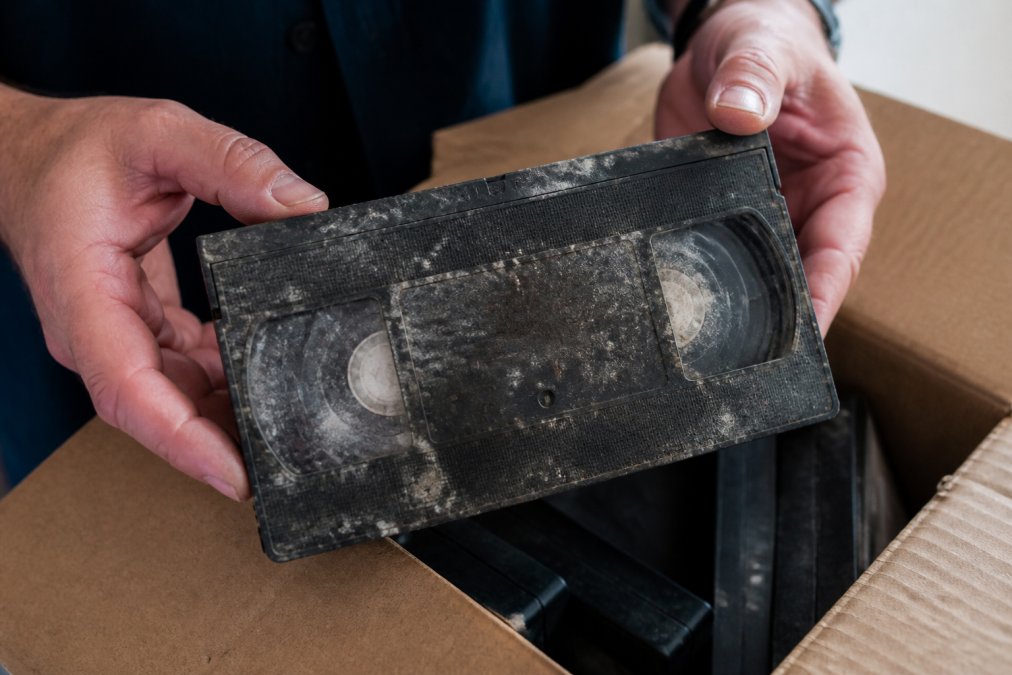
Mould appears as visible spots, usually white, green, or black, on the tape itself or inside the cassette case. If you see mould, the tape has been exposed to humidity above 50 percent for an extended period. Mould doesn’t always mean the tape is unplayable, but it indicates serious environmental problems and the infection will spread if conditions don’t change.
Vinegar Syndrome is a chemical breakdown of the tape’s acetate base that produces acetic acid as a byproduct. The smell is distinctive: a strong vinegar odour coming from the cassette. This happens naturally over decades, but heat and humidity accelerate it dramatically. Once Vinegar Syndrome begins, it’s irreversible. The tape becomes brittle, the magnetic coating flakes off, and playback becomes impossible.
Early signs of Vinegar Syndrome include a slight vinegar smell, visible discolouration of the tape (usually a brownish tint), and audio or video dropout during playback. If you notice these symptoms, digitisation should be a priority. The tape is actively degrading and may become unplayable within months.
How to Preserve Degrading Family Tapes Before It’s Too Late
Rewinding and Spool Tension Management
VHS tapes should be rewound fully and stored in the rewound position. When tape sits in a partially played state for years, the sections under tension can develop permanent deformation. The spool tension, the slight resistance that keeps tape taut on the reels, becomes uneven, and the tape may not advance smoothly during playback.
Rewind tapes using a VCR or tape rewinder before storage. Don’t use fast-forward or rewind buttons on a camcorder or editing deck, which can stress the tape. A dedicated rewinder is gentler. If you don’t have access to playback equipment, many video transfer services will rewind tapes as part of their preparation process.
Check the tension occasionally. Gently rotate the reels by hand, they should turn smoothly with consistent resistance. If one reel feels loose or the other feels stuck, the tape may be developing problems. This is a sign to prioritise digitisation.
Regular Playback and Maintenance
This seems counterintuitive, but occasional playback actually helps preserve tapes. Playing a tape once every few years keeps the tape path clear and prevents the tape from sticking to itself or the reels. Playback also lets you detect problems early, audio dropout, video distortion, or mechanical noise, before the tape becomes completely unplayable.
However, playback must be done carefully. Use a well-maintained VCR in good working condition. Dirty playback heads can scratch the tape. A VCR that’s been unused for years may need cleaning before use. If you don’t have reliable playback equipment, skip this step and move directly to digitisation.
Don’t attempt to repair a tape that’s already showing signs of damage. Tape splicing, cleaning, or rewinding by untrained people usually makes problems worse. If a tape shows mould, Vinegar Syndrome, or mechanical damage, professional digitisation is the only safe option.
When to Consider VHS to Digital Conversion Services
If your tapes show any signs of degradation, mould, vinegar smell, audio/video dropout, or mechanical damage, digitisation should be done soon. Professional services have equipment designed to read damaged tapes and extract the signal before it’s lost completely. Home equipment simply won’t work on tapes that are already failing.
Even undamaged tapes benefit from digitisation. Digital files don’t degrade. They’re accessible on modern devices without needing to maintain working VCR equipment, which is becoming increasingly difficult to find. Digital files can be backed up, shared with family, and preserved indefinitely with minimal effort.
Professional digitisation services handle the tape carefully, use proper cleaning and playback equipment, and deliver files in formats that will remain accessible for decades. Showbiz Video Productions digitises VHS tapes using professional-grade equipment and offers same-day turnaround in most cases. The team handles your irreplaceable recordings with the care they deserve, ensuring the memories are preserved in high-quality digital format.
Conclusion
Proper storage of old VHS tapes is straightforward but requires attention to five key factors: stable temperature, controlled humidity, vertical orientation, protective containers, and protection from light and magnetic fields. Most homes don’t naturally provide these conditions, which is why so many family collections degrade over time.
If your tapes are already showing signs of damage, mould, vinegar smell, or playback problems, professional digitisation is essential. Showbiz Video Productions has over 20 years of experience converting VHS tapes to digital format using professional-grade equipment and offers same-day service in most cases. Get a quote today and preserve your family memories before they’re lost forever.
Frequently Asked Questions
What are the signs of mould on VHS tapes?
Mould on VHS tapes appears as white, green, or black spots on the plastic casing or magnetic tape itself. You may also notice a musty odour, sticky residue, or tape that looks discoloured or warped. If you spot these signs of VHS tape mould, isolate the affected tape immediately to prevent spores spreading to other tapes. Mould indicates excessive humidity and requires professional digitisation before the tape becomes unplayable.
Should VHS tapes be stored vertically or horizontally?
Store VHS tapes vertically, standing upright like books on a shelf. Vertical orientation reduces spool tension and prevents the magnetic tape from sagging under its own weight, which causes head clogging and signal degradation. Horizontal stacking puts pressure on the tape layers, leading to faster deterioration and playback issues. Ensure tapes are supported so they don’t lean or bend.
Is it worth keeping old VHS tapes if they’re degrading?
If your tapes show signs of degradation, digitisation is your best option. Once chemical breakdown (Vinegar Syndrome) or mould sets in, the tape will continue to deteriorate regardless of storage conditions. Professional VHS to digital conversion services can recover your video signal and preserve the content in a stable digital format before the tape becomes unreadable. This protects irreplaceable family memories for future generations.
How long do VHS tapes last in storage?
VHS tapes typically last 15-25 years under ideal storage conditions, though some may degrade faster. Temperature fluctuations, high humidity, and poor air circulation accelerate tape degradation. Even in climate-controlled environments, magnetic tape loses quality over time due to natural chemical breakdown. Regular playback and rewinding help maintain spool tension, but long-term stability is best ensured through digitisation rather than relying on tape preservation alone.
This article was written using GrandRanker